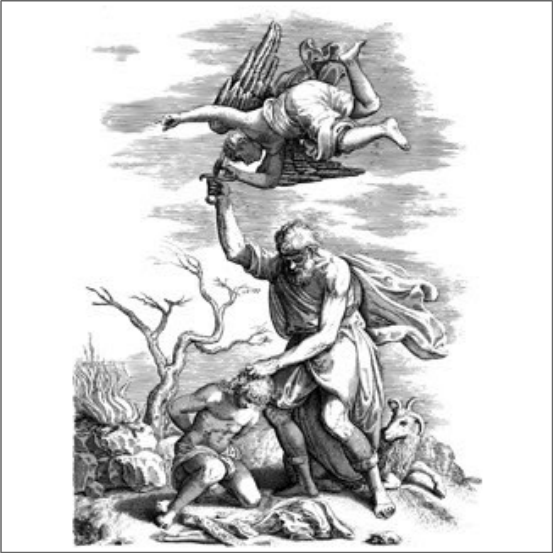
Approximately 1000 BCE King David captures the city Jebus, and makes it the capital of his United Kingdom. North of the city of David, upon the hilltop of Mount Moriah best known for the Binding of Isaac by Abraham, David’s son Solomon builds the First Temple. Some 400 years later in 586 BCE the Babylonian King Nebuchadnezzar conquers the Judean Kingdom and destroys the Temple.

Mount Moriah
Of the many traditions about Mount Moriah, perhaps the best known is the Binding of Isaac by Abraham as related in the Book of Genesis (Genesis 22). It is upon this same hilltop that David's son Solomon builds the First Temple.
The Large Stone
The City of David boasts a fascinating archaeological site called the Large Stone Structure. Archaeology suggests that it could be the remains of King David's palace, a grand public building dating back to the 10th-9th century BCE.
538 BCE Cyrus, King of Persia, defeats the Babylonians. The exiled Hebrews, under the leadership of Zerubavel and later Ezra, returned to Jerusalem and built the Second Temple. 332 BCE The Greeks under Alexander the Great conquers the Judean Kingdom.
63 BCE Pompey conquered Jerusalem and the Roman period began. In the year 70 CE after a 4 year rebellion against the Romans, the Second Temple was destroyed and the Jewish citizens were forced to leave the city once again.

Church of the Holy Sepulchre
The church is venerated as Calvary (Golgotha), where Jesus of Nazareth was crucified, and also includes the place where Jesus is said to have been buried and resurrected. Within the church are the last five Stations of The Cross along the Via Dolorosa.

The Western Wall
The lower section of the wall was constructed by King Herod 2000 years ago as a retaining wall to support the Temple Mount platform.
During the reign of the Emperor Hadrian, and after the defeat of the Bar Kochva rebellion against Rome in 135 CE, the destroyed city of Jerusalem was rebuilt and renamed Aelia Capitolina. The city is rebuilt along the lines of a Roman city. Where The Second Temple once stood, a temple to Jupiter is constructed. During the reign of Constantine the Great (306-337) the city reverts to being called Jerusalem and becomes officially sacred to Christianity. The Church of the Holy Sepulchre is built and dedicated in 335. The temple to Jupiter is destroyed and the Temple Mounts remains a ruin.
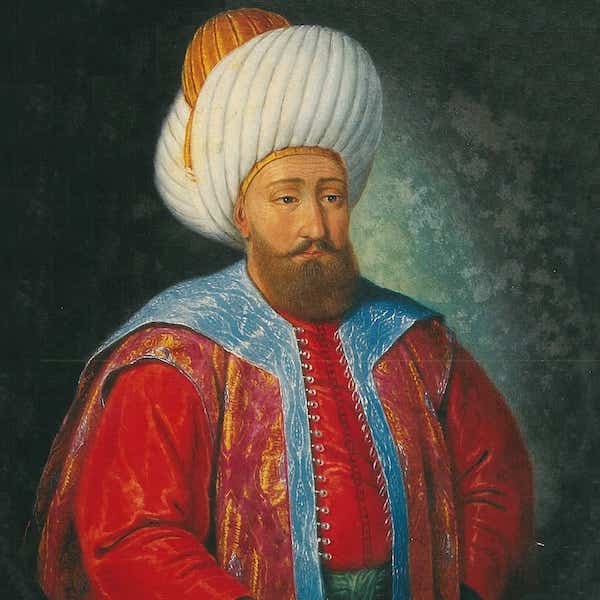
Muslim armies capture Jerusalem in 638. On the Temple Mount, the Dome of the Rock and the Al-Aqsa mosque were built and Islam became the dominant religion of the city. The Dome of the Rock was completed in 691 and for the past 1300 years till today has remained essentially the same as originally built. In the middle of the eighth century the El-Aksa mosque was destroyed by an earthquake and restored toward the end of that century.
1099 the Crusaders capture Jerusalem after a 5 week siege. A general slaughter of Jews and Muslims ensued. Four hundred and sixty years after its capture by the Muslims, the city once again became Christian. The Holy sites on the Temple Mount were declared Christian. The Temple Mount became the seat of the Templers. 1187 Jerusalem is captured by Saladin, ending Christian rule in Jerusalem.
The Period begins with the rule of the Ayyubi (1187-1250) continues with the rule of the Mamaluke (1250-1517) and ends with that of the Ottomans (1517-1917). With the capture of Jerusalem by Saladin (1187) the churches on the Temple Mount were reconverted for Muslim use. Christian and Crusader emblems were removed from all structures.
During World War 1 the country was captured by the British. The League of Nations creates the Mandate of Palestine to be supervised by Great Britain. Due to ongoing fighting the British decided to divide Palestine into a Jewish State and an Arab State. On the 14th of May, 1948, the British Mandate came to an end, Israel declares its independence and the War of Independence begins. In 1949, after the war, Jerusalem became a divided city with the Old City and the Temple Mount occupied by Jordan. During the Six Day War 1967 Israel captures the Old City and the Temple Mount and the city is reunited.
The outlook from the Mount of Olives offers one of the most iconic and breathtaking views of Jerusalem. From this elevated point, visitors gain a deeper understanding of the city’s history and its role as a holy center for faith and tradition.
The Western Wall
Western Wall Tunnels
The Dome Of The Rock
The Holy Sepulchre
Gethsemane
King David’s Tomb
The Last Supper Room
The Garden Tomb
The City Of David
Church of St. Peter in Gallicantu
Tower of David Museum
the Armenian Quarter & St. James Cathedral
The Jewish Cemetery
Herod’s Palace

The Walls of the Old City were built by the Ottoman sultan Suleiman the Magnificent in the mid-16th century. The walls are about 4 km long and 12 meters high.

The Tomb of Mary is a Greek Orthodox and Armenian Apostolic church, believed to be the burial place of the Virgin Mary, the mother of Jesus. The church is built underground and features a long stone staircase leading to the ancient crypt.
Mount of Olives
Mount Gilboa rises above the Jezreel Valley as the setting of one of the most dramatic moments in the Bible. According to 1 Samuel 31, it was here that King Saul, wounded in battle and seeing his sons — including Jonathan — lying slain in the valley below, fell on his own sword to avoid capture by the Philistines. Their bodies were later taken and hung on the walls of Bet She’an, visible from the slopes of the mountain.
This event is more than a battlefield tragedy—it marks a pivotal turning point in the biblical story. It reflects the complex relationship between Saul and David, the deep bond between David and Jonathan, and the divine choice to anoint David as the next king of Israel. In the following chapter (2 Samuel 1), David mourns Saul and Jonathan with a heartfelt lament: “How the mighty have fallen…”
This moment also marks the beginning of the rise of the House of David, the royal lineage of Israel’s future kings. Standing at Mount Gilboa, surrounded by the same landscape described in the Bible—the mountain, the valley, and nearby Bet She’an—you can feel the story come alive through the geography and the echoes of the ancient past.