Map of lower Galilee
Uncover the history and diversity of the Lower Galilee region. This interactive map highlights key sites such as Caesarea Maritima, Nazareth, Tel Megiddo, and many others—each rich in biblical, historical, and cultural significance. Explore ancient cities, sacred landscapes, and major travel routes that shaped the story of this vibrant region.
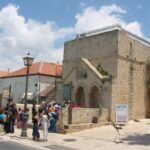

Caesarea National Park
Bet She'an
Stella Maris Monastery
The Baha'i Gardens
Tel Megiddo
Nazareth
Mount Gilboa
One of the most dramatic and touching stories in the Bible happened right here. King Saul and his sons fell in battle against the Philistines (1 Samuel 31), with their bodies later displayed at Bet She’an. This pivotal moment marked the rise of David and the House of David.
Mount Tabor
Muhraka Monastery
Harod Spring
Bet She'arim
Carmel Caves
Atlit Detention Camp
Beit Alfa Synagogue
Gan HaShlosha (Sachne)
Cana
Zippori
Caesarea Maritima
Site 1
Caesarea Maritima is one of the most amazing archaeological and historical sites in Israel, a grand ancient port city built by Herod the Great in the 1st century BCE. Inspired by his vision to create a world-class harbor and a symbol of Roman power in the region, Herod transformed a small coastal village into a magnificent metropolis dedicated to Emperor Augustus. Caesarea became the Roman capital of Judea and a bustling hub of trade, governance, and architectural brilliance.
In Christian tradition, Caesarea holds special significance as the place where Cornelius the Centurion became the first Gentile to be baptized by the Apostle Peter (Acts 10). This pivotal event marked the beginning of the Christian mission to the non-Jewish world, making Caesarea a key site in the early spread of Christianity.
What to See & Do:
The Roman Theater
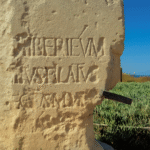
One of the oldest and best-preserved Roman theaters in the eastern Mediterranean. It still hosts performances today. From the top rows, enjoy a stunning view of the sea—just as audiences did 2,000 years ago.Near the theater, archaeologists discovered the Pontius Pilate Stone—an inscription bearing the name of the Roman governor who sentenced Jesus to crucifixion. This find provides physical evidence of Pilate’s historical existence and is of great significance to Christian tradition.
The Hippodrome
A long, oval-shaped arena where chariot races and gladiator games once thrilled thousands. Interpretive signs help bring the events and atmosphere of the Roman period to life.
Herod’s Palace
Built on a rocky promontory jutting into the sea, Herod’s coastal palace reflects the luxury and ambition of his reign. One of its most striking features is a large swimming pool carved into the natural rock and surrounded by mosaic floors. This seaside pool, filled with water, was likely used for leisure and displays of wealth—offering a dramatic view of the Mediterranean and a taste of royal life in the Roman world.
According to the New Testament (Acts 25–26), it may have been here or nearby that the Apostle Paul stood trial before King Agrippa, adding deep Christian significance to the site.
Sebastos Harbor – Herod’s Engineering Wonder
One of Herod’s most ambitious projects, this massive artificial harbor was built using Roman concrete that hardened underwater. A breakwater made of stone and volcanic ash allowed large ships to dock safely. Though much is now submerged, parts can still be seen from the promenade or explored by divers—testament to Herod’s bold vision and advanced engineering.
The Newly Excavated Prison Complex
Discovered near Herod’s palace, this structure may have served as a Roman administrative or detention facility. Some traditions identify it as the possible site where Paul was imprisoned before being sent to Rome.
The Crusader Fortress
Built in the 13th century atop earlier Roman and Byzantine layers, this imposing fortress features thick walls, towers, and a moat. Climb the ramparts for panoramic views of the harbor and surrounding ruins.
The Bathhouse Complex and Mosaics
Explore the remains of Roman bathhouses with intricate mosaic floors and heating systems that offer a glimpse into ancient luxury and daily life.
The Byzantine Street and Marketplace
A reconstructed path lined with columns and public buildings that reflect the city’s continued importance during the Byzantine period.
The Visitor Center and Multimedia Experience
Located within the Crusader walls, this center presents Caesarea’s history through engaging multimedia displays and stories of historical figures such as Herod, Paul, and Saladin.
The Aqueduct
Located just north of the city, this massive stone aqueduct carried fresh water from springs near Mount Carmel to Caesarea. Built by Herod’s engineers and later expanded by the Romans, it’s a stunning example of ancient infrastructure and a great photo stop along the beach.
Art Galleries and Boutique Shops
Located within restored Crusader-era buildings, these charming shops and cafés blend modern culture with Caesarea’s historic setting.
Bet Shean
Site 2
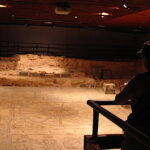
Bet Shean is one of Israel’s most impressive archaeological sites, showcasing layers of history from the Canaanite period through the Roman and Byzantine eras. The city reached its peak under Roman rule, when it was part of the Decapolis—a group of ten prominent Greco-Roman cities mentioned in historical and New Testament sources. Excavations have revealed a spectacular Roman theater, colonnaded streets, bathhouses, a marketplace, and intricate mosaics, offering a vivid glimpse into daily life in a thriving ancient city.
Bet Shean is also mentioned in the Bible—notably as the place where the bodies of King Saul and his sons were hung on the city walls by the Philistines (1 Samuel 31).
In Christian tradition, its significance is tied to the Decapolis, a region referenced in the New Testament (Mark 7:31, Matthew 4:25), where Jesus’s teachings and miracles reached Gentile populations—making Bet Shean part of the broader landscape of Jesus’s ministry.
What to See & Do:
Roman Theater
A beautifully preserved 7,000-seat theater that still hosts performances today. It offers insight into Roman entertainment and city life.
Colonnaded Streets
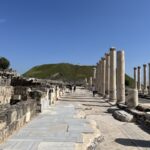
Walk along the ancient Palladius Street, lined with columns, shops, and remnants of Roman grandeur. The original paving stones and structures are remarkably intact.
Public Bathhouses
Explore the remains of large bath complexes, complete with changing rooms, hot and cold pools, and advanced heating systems—a testament to Roman luxury.
Public Lavatory
A well-preserved communal Roman toilet with stone seats arranged over a flowing water channel. It offers a fascinating and often amusing look into daily hygiene practices of the time.
Mosaic Floors
View the stunning mosaics featuring animals, mythological scenes, and geometric patterns, particularly in the Sigma Building and other structures.
Tell Bet Shean (Biblical Mound)
Climb the ancient mound that predates the Roman city. This is where the biblical city stood, and where, according to 1 Samuel 31, the bodies of King Saul and his sons were hung on the city walls by the Philistines. The mound also contains layers of Canaanite and Egyptian settlement and offers sweeping views of the Jordan Valley.
The Marketplace (Agora)
Visit the remains of the bustling Roman marketplace, where merchants once sold goods from across the empire.
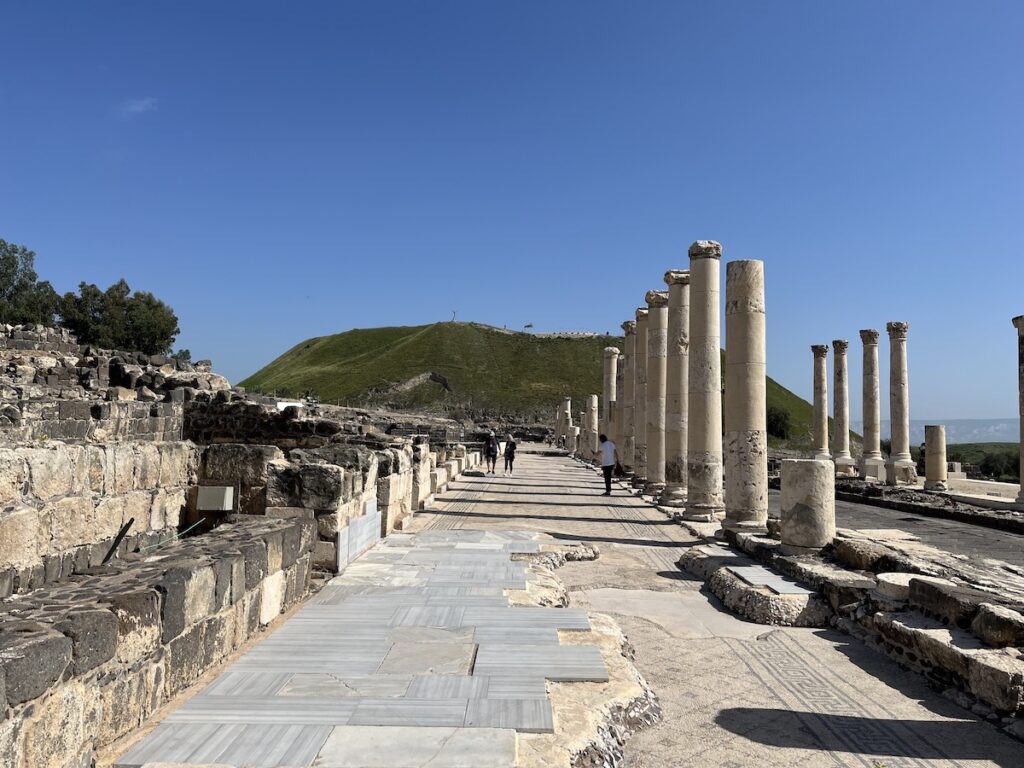
Stella Maris Monastery
Site 3
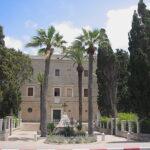
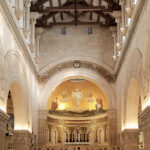
Stella Maris (“Star of the Sea”) is a Carmelite monastery perched on the slopes of Mount Carmel in Haifa, offering sweeping views of the Mediterranean Sea. The monastery was established in the 19th century and serves as the world headquarters of the Carmelite order. Its richly decorated church features marble columns, colorful ceiling frescoes, and a dome painted with scenes from the life of the prophet Elijah.
Beneath the church lies a cave traditionally identified as the place where Elijah sought refuge during his confrontation with the prophets of Baal (1 Kings 18). While the Bible does not mention a specific cave, Christian tradition has long venerated this site as connected to Elijah’s story. Today, Stella Maris is an important pilgrimage destination in Christian tradition and a peaceful place of worship and reflection.
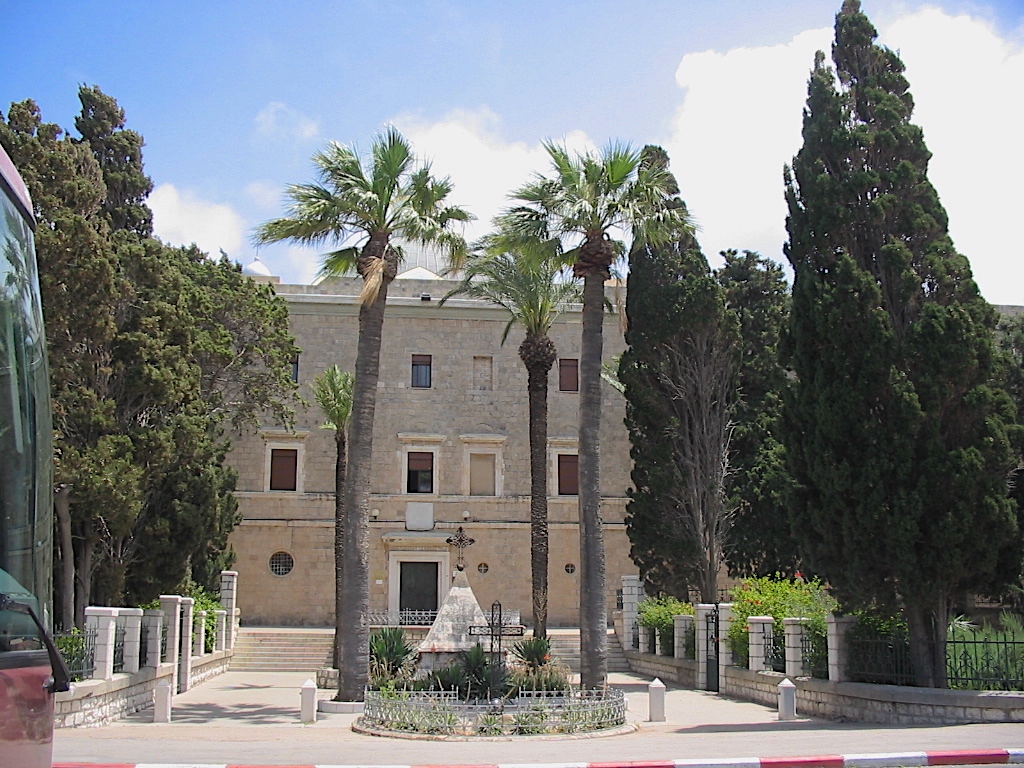
The Baha'i Gardens
Site 4
If you’re touring Israel and your route or schedule allows for a stop in Haifa, a visit to the Bahá’í Gardens is highly recommended. These world-renowned gardens are one of the country’s most beautiful and serene sites, offering a unique blend of natural beauty, spiritual significance, and meticulous design.
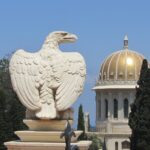
The gardens stretch across 19 terraces down the slopes of Mount Carmel, with the golden-domed Shrine of the Báb at their center—one of the holiest sites of the Bahá’í Faith. You can enjoy stunning panoramic views from the top lookout or join a guided tour through selected terraces. Visitors are also welcome to enter the Shrine of the Báb, a peaceful and sacred space.
Recognized as a UNESCO World Heritage Site, the Bahá’í Gardens offer an unforgettable experience for anyone interested in landscape design, world religions, or simply a moment of quiet reflection amid beauty.
Tel Megiddo – Gate to Ancient Empires
Site 5
Tel Megiddo, located at the edge of the Jezreel Valley, is one of the most important archaeological sites in Israel and a UNESCO World Heritage Site. Strategically positioned along the ancient Via Maris trade route, it controlled access between Egypt and Mesopotamia, making it a focal point for trade, conquest, and culture for over 6,000 years.
Biblical and Christian Significance
Megiddo is mentioned several times in the Bible and is perhaps most famously linked to Armageddon—a term derived from the Hebrew Har Megiddo (Mount Megiddo)—described in the Book of Revelation (16:16) as the site of the final battle between good and evil. The Jezreel Valley, which stretches out below the tel, is often referred to as the Valley of Armageddon, further reinforcing Megiddo’s symbolic and prophetic significance in Christian eschatology.
What to See & Do:
Start walking up the path
Enter the site and walk uphill toward the archaeological area, passing layers of ancient civilizations.
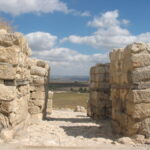
Canaanite City Gate
Stop at the massive gate from the 15th century BCE, made of large stones. This is one of the oldest preserved city gates in the region.
Solomonic Gate Complex
Continue to the six-chambered gate, attributed to the time of King Solomon (10th century BCE), showing advanced Israelite city planning.
Canaanite Altar
Walk to the large round altar (late Bronze Age), built with well-cut stones. It was used for animal sacrifices—one of the oldest such structures discovered.
Silo and Stables of King Ahab
Nearby are large grain silos, used for storing food during times of siege. Just beyond, see the remains of stables attributed to King Ahab, including stone mangers and tethering holes—evidence of Megiddo’s role as a chariot city.
Panoramic Viewpoint
Climb to the observation platform overlooking the Jezreel Valley. This strategic location offers sweeping views over a valley that has seen countless historic battles.
Water System Entrance
Head down toward the water system. This clever engineering project included a deep shaft and horizontal tunnel, securing water access during sieges.
Spiral Staircase and Tunnel
Descend 183 steps down the shaft, then walk 70 meters through the tunnel that led to the hidden spring outside the city walls.
Exit the Tunnel
Come out at the spring’s outlet and follow the path back around to the visitor center.
Nazareth – Where the Story Began
Site 6
Visiting the city of Nazareth today, one can’t help but wonder: What was it like 2,000 years ago? Walking through its busy streets, navigating traffic, and searching for parking in what is now a vibrant Arab city, it’s easy to forget that this was once a quiet, rural village tucked high on a mountainside—a simple place where life moved at a very different pace.
And yet, can we truly walk in the exact footsteps of the local carpenter Joseph, Mary, and the young Jesus, and know precisely where each moment took place? Perhaps not. But this is where the story began—and that fact alone gives Nazareth a unique and deeply moving significance for many Christian visitors.
What to See & Do:
Some choose to visit just one location, while others take the time to explore them all—it often depends on your interests and the time you have. Here are the main places most often recommended:
The Basilica of the Annunciation – This Roman Catholic church is one of the most important Christian Catholic sites in the world. Built over the traditional site where the Angel Gabriel is believed to have appeared to Mary, it is a powerful place of prayer and reflection. The modern structure, completed in 1969, sits above earlier church ruins and the grotto thought to be Mary’s home. The church is also famous for its stunning collection of Marian artworks gifted by countries around the world, each showing the Virgin Mary in their own cultural style.
Mary’s Well and the Greek Orthodox Church of the Annunciation – According to Orthodox tradition, the Annunciation happened while Mary was drawing water from the local spring. This peaceful church, richly decorated with icons, is built over that very spring and offers an alternative, beautifully spiritual version of the biblical moment.
Nazareth Village – If you want to go beyond the churches and step into daily life from Jesus’ time, this is the place. Nazareth Village is a carefully reconstructed first-century village where guides in period clothing reenact life as it was in Galilee 2,000 years ago. With working olive presses, stone houses, and terraced gardens, it offers a vivid, hands-on experience of biblical times.
Muhraka Monastery
Site 7
Perched high on the southern slopes of Mount Carmel, Muhraka Monastery marks the traditional site of the dramatic showdown between the prophet Elijah and the 450 prophets of Baal, as recorded in 1 Kings 18. The name Muhraka means “the place of burning” in Arabic, referring to the divine fire that, according to the Bible, descended from heaven to consume Elijah’s sacrifice—proving the power of the God of Israel.
This confrontation took place during the reign of King Ahab, who, under the influence of his wife Queen Jezebel, promoted the worship of Baal and led Israel into idolatry. Elijah’s challenge on Mount Carmel was a bold stand against this royal-sponsored paganism and became a defining moment in the struggle between faith in the God of Israel and the foreign gods introduced by Jezebel.
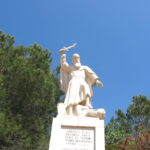
Today, the site is cared for by Carmelite monks and features a simple chapel dedicated to Elijah. Outside, a statue of the prophet with a raised sword overlooks a breathtaking panoramic view of the Jezreel Valley—a powerful reminder of the biblical events that are believed to have occurred here.
Mount Tabor
Site 8
With its distinct, rounded dome rising from the Jezreel Valley, Mount Tabor is one of the most striking landmarks in northern Israel. Its unique silhouette and elevated position have made it a strategic and sacred site since ancient times.
In the Old Testament, Mount Tabor is the place where Deborah, a prophetess and judge of Israel, summoned Barak to lead the Israelite army into battle against the Canaanite commander Sisera (Judges 4–5). It was under Deborah’s leadership and prophetic guidance that the Israelites achieved a decisive victory, making Mount Tabor a symbol of courage, faith, and the powerful role of women in biblical history.
For Christians, Mount Tabor is traditionally identified as the Mount of Transfiguration, where, according to the Gospels (Matthew 17, Mark 9, Luke 9), Jesus was transfigured before Peter, James, and John. His face shone like the sun, and His garments became dazzling white, as Moses and Elijah appeared beside Him. A voice from heaven declared, “This is My beloved Son… listen to Him.” It is a profound moment that revealed Jesus’ divine nature and mission.
At the summit stands the Roman Catholic Church of the Transfiguration, maintained by the Franciscan Order. Built in the 1920s by the Italian architect Antonio Barluzzi, the church was carefully designed so that the rising sun illuminates the altar during certain times of the year—symbolizing the radiant transformation of Christ. The church features majestic mosaics, side chapels dedicated to Moses and Elijah, and a peaceful courtyard.
Also on the mountain is a Greek Orthodox Church and monastery, representing another ancient Christian tradition and offering its own quiet atmosphere for reflection and prayer.
Practical Details:
Opening Hours (Catholic Church):
Monday–Saturday: 8:00 AM – 11:45 AM, 2:30 PM – 5:00 PM
Sunday: Closed
Access: Large buses are not permitted on the narrow summit road. Visitors are required to park at the base and take a local taxi shuttle service to the top.
Harod Spring – The Story in the Bible
Site 9
Harod Spring (Ein Harod) is famously associated with the biblical story of Gideon in the Book of Judges (Judges 7). According to the story, Gideon was chosen by God to lead the Israelites against the Midianites. He assembled an army, but God instructed him to reduce the number of soldiers so that victory would clearly be attributed to divine intervention rather than human strength.
At the Spring of Harod, Gideon brought the men to drink water. God told him to observe how the men drank: those who lapped the water with their tongues like a dog were separated from those who knelt down to drink. Only 300 men who lapped the water were chosen to go into battle with Gideon. With this small force, Gideon launched a surprise nighttime attack and defeated the vastly larger Midianite army.
The spring is still visible today, located at the foot of Mount Gilboa, and is part of Ma’ayan Harod National Park. Surrounded by green landscapes, the site is peaceful and beautiful—yet carries the memory of one of the most dramatic moments in the biblical Judges period.
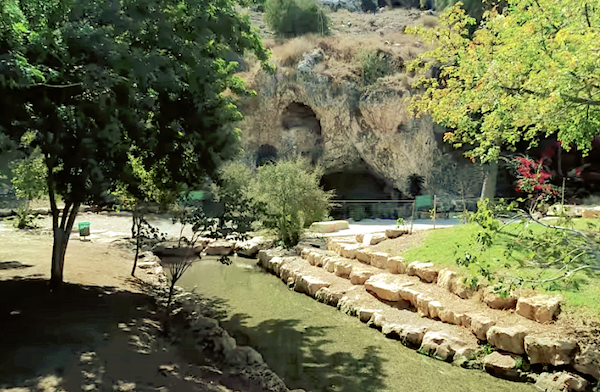
Carmel Caves –Nahal Me‘arot Nature Reserve
Site 10
Nestled in the western Carmel Mountains near Haifa, Nahal Me’arot (“Valley of the Caves”) is a UNESCO World Heritage Site that offers a fascinating journey through more than half a million years of human prehistory. This unique archaeological site preserves evidence of both Neanderthal and early modern human life.
What to See & Do:
Walk through the four main caves—Tabun, Jamal, El Wad, and Skhul—each representing different periods of human development.
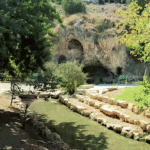
Tabun Cave is the most famous, with layers that span hundreds of thousands of years and remarkable finds like stone tools and ancient hearths.
El Wad Cave, once home to early modern humans, features a large entrance and was a center for Natufian culture.
Reconstructed Prehistoric Camp
See how our ancestors lived with life-size replicas of ancient dwellings and tools, giving visitors a hands-on glimpse of daily life tens of thousands of years ago.
Multimedia Show
A short and engaging presentation inside the site provides background on the prehistoric discoveries and their global significance.
Nature Trail and Scenic Views
The paved, easy-to-navigate path connects the caves and is lined with signs explaining the archaeological and natural importance of the area. The surrounding Carmel landscape adds to the experience.
Opening Hours (Israel Nature and Parks Authority):
April–September: 8:00–17:00
October–March: 8:00–16:00
(Last entry one hour before closing)
A great stop for families, archaeology enthusiasts, and anyone curious about human history—Tabun Cave is the highlight not to miss.
Bet She'arim National Park
Site 11
Bet She’arim National Park, located in northern Israel’s Lower Galilee region, is an important archaeological and historical site. It was a thriving Jewish town during the Roman and Byzantine eras and became famous as a prestigious burial place for many prominent Jewish sages, including Rabbi Judah HaNasi, who compiled the Mishnah. The Mishnah is one of Judaism’s most significant texts, as it organizes and records Jewish oral laws and traditions, forming the foundation of the Talmud and shaping Jewish religious life for centuries. The park is best known for its extensive underground catacombs, which feature beautifully carved stone tombs decorated with inscriptions and artistic motifs in several ancient languages, reflecting the rich cultural heritage of the community that lived there nearly 2,000 years ago.
Alexander Zaïd and the Revival of Jewish Self-Defense
Bet She’arim is not only a place of ancient Jewish heritage—it’s also tied to a story of modern Jewish revival through the life of Alexander Zaïd, one of the most iconic pioneers of the early 20th century.
Zaïd was a founding member of Hashomer, the first organized Jewish guarding force in the Land of Israel since the Roman era. Established in 1909 during the Second Aliyah, Hashomer marked a turning point in modern Zionist history. It represented a return to Jewish self-reliance and defense after nearly 2,000 years in which Jews lived under foreign rule and depended on others for protection. Hashomer’s members, including Zaïd, patrolled Jewish farming communities, often on horseback and at great personal risk, to protect the land and its people.
Zaïd eventually settled in the hills overlooking Bet She’arim. While patrolling the area in the 1920s, he noticed unusual rock formations and cave openings in the hillside. Sensing their importance, he reported them—an act that led to formal archaeological investigations and the rediscovery of the ancient necropolis. His intuition and connection to the land played a key role in uncovering one of the most important Jewish burial sites from antiquity.
Today, visitors to the area can pay tribute to Alexander Zaïd at a striking bronze statue of him on horseback, located on a hill near the park. The site offers a sweeping view of the surrounding valley and stands as a lasting monument to a man who symbolized the rebirth of Jewish presence, protection, and pride in the Land of Israel.
What to See & Do:
Explore the Catacombs: Walk through the network of ancient burial caves adorned with intricate carvings of symbolic designs, animals, and religious imagery.
Visit the Tomb of Rabbi Judah HaNasi: See the revered resting place of this significant Jewish leader who played a key role in preserving Jewish law.
Stroll Scenic Trails: Enjoy peaceful walking paths with panoramic views of the surrounding Galilee hills.
See the Statue of Alexander Zaïd: Just outside the main park area, visit the impressive bronze statue of Alexander Zaïd on horseback. The statue stands on the hill where Zaïd once patrolled and offers a great view of the valley.
Visit the Visitor Center: Learn more about the site’s history and cultural importance through engaging exhibits.
Atlit Detention Camp
Site 12
Atlit Detention Camp, located just south of Haifa along Israel’s Mediterranean coastline, is one of the most powerful historical sites in the country. It tells the gripping story of Ma’apilim—Jewish immigrants who attempted to enter the Land of Israel illegally during the British Mandate, often in defiance of harsh immigration restrictions.
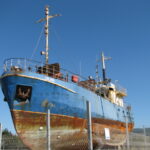
From the 1930s until Israel’s independence in 1948, thousands of Jews—many of them Holocaust survivors—risked their lives crossing the sea in overcrowded, often unseaworthy ships to reach the shores of their ancient homeland. Upon arrival, many were arrested by British forces and brought to Atlit, where they were separated by gender, disinfected, and held behind barbed wire in basic wooden barracks.
The camp today serves as a national heritage site and museum, preserving this important chapter in the struggle for Jewish independence and return. It stands as a moving tribute to human courage, perseverance, and the dream of freedom.
Atlit also played an inspirational role in popular culture. It influenced the story of Exodus by Leon Uris, the bestselling novel that brought global attention to the Aliyah Bet movement. The book was adapted into the 1960 film Exodus, starring Paul Newman as the resistance fighter Ari Ben Canaan and Eva Marie Saint as Kitty Fremont, an American nurse who sympathizes with the Jewish cause. The film helped immortalize the story of Atlit and the refugees who passed through its gates.
What to See & Do:
Restored Barracks: Step inside original wooden buildings where detainees lived. Inside you’ll find immersive exhibits that recreate the conditions and tell the stories of those held here.
Disinfection Facility: Tour the preserved showers and disinfection rooms used to process new arrivals—a chilling but essential part of understanding the immigrants’ experience.
Immigrant Ship Replica: Climb aboard a full-scale reconstruction of a Ma’apilim ship to experience what it was like to cross the sea in cramped and dangerous conditions.
Watch a Short Film: View a powerful documentary that tells the personal stories of survivors, escape attempts, and the camp’s liberation by Jewish underground fighters.
The Fence and Guard Tower: Walk along the original barbed wire fence and see the recreated British watchtower that once kept watch over the detainees.
Palmach Rescue Stories: Learn about the daring 1945 raid by the Palmach that freed over 200 detainees—a key moment in the history of the underground Jewish resistance.
Exodus Legacy Corner: Explore a small exhibit dedicated to the impact of the novel and film Exodus, showing how the story of Atlit reached international audiences.
Beit Alfa Synagogue
Site 13
The Beit Alfa Synagogue offers a fascinating glimpse into Jewish life during the Byzantine period. Built in the 6th century CE and discovered in 1928 by members of Kibbutz Beit Alfa, this ancient synagogue is most famous for its remarkably well-preserved mosaic floor—one of the most stunning ever uncovered in Israel.
The mosaic, created during the reign of Byzantine Emperor Justin I, was signed by two artisans, Marianos and his son Hanina, whose names appear in an inscription at the entrance. It is divided into three panels, each rich in symbolism and historical depth:
The Binding of Isaac: This biblical scene shows Abraham ready to sacrifice Isaac, accompanied by Hebrew labels identifying each figure. A divine hand reaches from above, signaling the angel’s intervention.
The Zodiac Wheel: At the center of the floor is a colorful zodiac circle. The twelve signs surround the image of Helios, the sun god, riding his chariot. This surprising blend of Jewish and Greco-Roman imagery reflects the cultural complexity of Jewish communities living under Byzantine rule.
The Torah Shrine: The third panel shows a representation of a Torah ark flanked by ritual objects including menorahs, a shofar, a lulav, and an etrog, highlighting the synagogue’s religious function and connection to Jewish traditions.
Today, the synagogue is housed in a protective structure as part of the Beit Alfa Synagogue National Park. An engaging audiovisual presentation explains the meaning behind each mosaic panel and recreates scenes of daily life from when the synagogue was active. Visitors can enjoy a unique combination of archaeology, art, and spirituality that brings the ancient Jewish story vividly to life.
Gan HaShlosha (Sachne)
Site 14
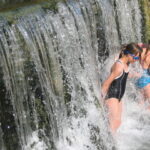
Gan HaShlosha, also known as Sachne, is one of Israel’s most beloved natural gems. The park is famous for its warm, turquoise spring pools that stay at a pleasant 28°C (82°F) all year round, inviting visitors to swim even in the heart of winter. Palm trees, green lawns, and waterfalls surround the pools, creating a scene that feels almost tropical—a true paradise in the north.
But Gan HaShlosha is more than just a place to relax. It holds deep historical meaning. Within the park stands a reconstruction of Tel Amal, one of the first “Tower and Stockade” outposts built by Jewish pioneers during the 1936–1939 Arab Revolt. Visitors can step into this early settlement and experience how early Zionist pioneers defended and built their homes under constant threat.
For history lovers, the park also features the Museum of Regional and Mediterranean Archaeology, which displays treasures from ancient civilizations that once passed through the region—including Egyptian, Greek, and Etruscan artifacts.
Practical Details:
Parking: Parking is available close to the pools and picnic areas, making it convenient for visitors to access the park’s main attractions.
Showers and Changing Facilities: Clean and well-maintained restrooms, showers with hot water, and changing rooms are provided for visitor comfort.
Kiosk and Snack Bar: A kiosk operates on-site, offering a selection of snacks, drinks, and basic supplies to cater to visitors’ needs.
Please note: On holidays and weekends, the park becomes very crowded, so it’s recommended to arrive early or consider visiting on weekdays for a more relaxed experience.
cana
Site 15
Cana, traditionally identified with the modern village of Kafr Kanna in the Lower Galilee, is best known as the site of the first miracle of Jesus, where he turned water into wine at a wedding feast (John 2:1–11). This event marks the beginning of his public ministry in Christian tradition.
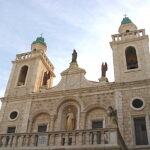
The Wedding Church, the most visited site in the village, is a Roman Catholic church built by the Franciscans in 1883, over the remains of earlier Byzantine and Crusader-era churches. Inside, visitors can see a large stone container believed by some to resemble the water jars used in the miracle. The peaceful atmosphere and historical layers of the site attract Christian pilgrims from around the world—many of whom come to renew their wedding vows in this sacred setting.
Zippori National Park
Site 16
Zippori (Sepphoris), set in the rolling hills of the Lower Galilee, was a vibrant cultural and administrative hub in ancient times. Fortified by Herod the Great and later rebuilt by his son Herod Antipas, it flourished during the very years when Jesus was growing up in nearby Nazareth.
In the 2nd century CE, Zippori became a major center of Jewish life. Rabbi Judah the Prince, compiler of the Mishnah, lived here and led the Sanhedrin, the supreme Jewish council. The city’s peaceful character earned it the name “the ornament of all Galilee.”
Centuries later, during the Crusader era, Zippori’s hilltop fortress served as a staging ground for the Crusader army before they were defeated by Saladin at the Battle of Hattin in 1187.
Today, visitors can explore stunning Roman villas with intricate mosaics (including the famous “Mona Lisa of the Galilee”), an ancient theater, a Jewish synagogue, Crusader remains, and more—making Zippori a richly layered site for history lovers of all backgrounds.
What to See & Do:
Roman Theater
Built in the 1st–2nd century CE and carved into the hillside, the theater could seat around 4,500 spectators. Though partly reconstructed, it gives a vivid sense of public life in the Roman city and offers sweeping views of the Galilean hills.
Dionysus House and the Mona Lisa of the Galilee
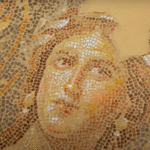
This luxurious Roman villa contains some of the most remarkable mosaics ever found in Israel. The highlight is the “Mona Lisa of the Galilee”—a beautifully preserved female face rendered in delicate stonework, part of a larger floor mosaic depicting the life of Dionysus, god of wine.
Nile Festival House
A sprawling Roman villa with floor mosaics illustrating the celebration of the Nile’s annual flooding, complete with exotic animals and Egyptian themes—highlighting Zippori’s cosmopolitan nature.
Ancient Synagogue
This 5th-century synagogue features a unique mosaic floor with Jewish symbols such as the menorah, shofar, and incense altar, as well as a zodiac wheel—a rare fusion of Jewish and Greco-Roman motifs.
Roman Cardo and Streets
Walk along the original Roman main road (Cardo), lined with stone columns, shops, and the distinct ruts from carts—giving you a tactile sense of daily life in the Roman city.
Water System
Zippori had an advanced water system with aqueducts, reservoirs, and cisterns. You can visit parts of the underground network that supplied fresh water to the ancient city.
Crusader Fortress and Church Remains
At the top of the site stands a small fortress built by the Crusaders in the 12th century, offering panoramic views. Nearby are the ruins of early Christian churches, reflecting the city’s multi-faith character.
Zichron Yaakov
Site 17
Zichron Yaakov is a charming town perched on the southern slopes of Mount Carmel, offering stunning views of Israel’s coastal plain. Founded in 1882 by Jewish pioneers with the support of Baron Edmond de Rothschild, it’s one of the country’s first modern settlements. Today, Zichron blends rich history with a vibrant atmosphere — cobbled streets, wineries, boutique shops, and a relaxed vibe make it a perfect getaway.
The town is also closely linked to the story of the Aharonson family, pioneers who played a central role in one of the most fascinating chapters of early Zionist history. Aaron Aharonson, a brilliant agronomist, discovered wild emmer wheat — a key breakthrough in understanding the origins of agriculture. But the family is most famous for founding NILI, a Jewish underground network that spied for the British against the Ottoman Empire during World War I. Aaron’s sister, Sarah Aharonson, became a national heroine after she was captured and tortured by the Ottoman authorities in 1917. Despite the brutal interrogation, she refused to reveal information. Tragically, she took her own life with a hidden pistol to protect her comrades. Their story remains a powerful part of Zichron’s identity.
What to See & Do:
Historic Pedestrian Street (HaMeyasdim Street)
The heart of old Zichron, this picturesque boulevard features restored 19th-century buildings, art galleries, boutique stores, cozy cafes, and a peaceful, European feel.
Ramat Hanadiv Gardens
A beautifully landscaped memorial park with walking trails, panoramic viewpoints, and picnic areas. It houses the tomb of Baron Rothschild and his wife.
Carmel Winery and Local Wineries
Visit the historic Carmel Winery for a guided tour and wine tasting. There are also several boutique wineries in the area offering intimate experiences.
Aharonson House (Beit Aharonson)
The original home of the Aharonson family, now a museum that tells the dramatic story of the NILI spy network. Through authentic artifacts, personal belongings, and historical documents, visitors learn about the bravery and sacrifice of the family — especially Sarah Aharonson, who became a symbol of courage and resistance.
First Aliyah Museum
Learn the inspiring story of the early Zionist pioneers through original artifacts, historical displays, and multimedia exhibits.


