Approximately 1000 B.C. King David captures the city Jebus, and makes it the capital of his United Kingdom.
King Solomon builds the first Temple.
Sennacherib king of Assyria attacks Jerusalem but failed to capture it.
Nebuchadnezzar king of Babylon conquers Jerusalem and destroys the First Temple.
Cyrus king of Persia allows the Jewish exiles to return from Babylon.
Completion of the building of the Second Temple by the Returnees. Ezra and Nehemiah rebuild the city walls.
Alexander the Great conquers Jerusalem.
Pompey conquers Jerusalem. Beginning of the Roman period.
Herod the Great anointed King of Judah enlarges the Temple mount and rebuilds the Temple.
Jesus was crucified
The destruction of Jerusalem and the Temple by Titus, the Roman.
The Bar Kokhba revolt. Second Jewish revolt against Rome.
Jerusalem rebuilt by the Emperor Hadrian as a Roman city and named Aelia Capitolina.
Constantine the Great begins construction of the The Church of the Holy Sepulchre.
Jerusalem conquered by the Persians.
Jerusalem was conquered by the Muslim Calif Umar ibn al-Khattab.
The Dome of the Rock built by Abd el-Malik.
Jerusalem conquered by the Crusadersders.
Jerusalem conquered by Saladin.
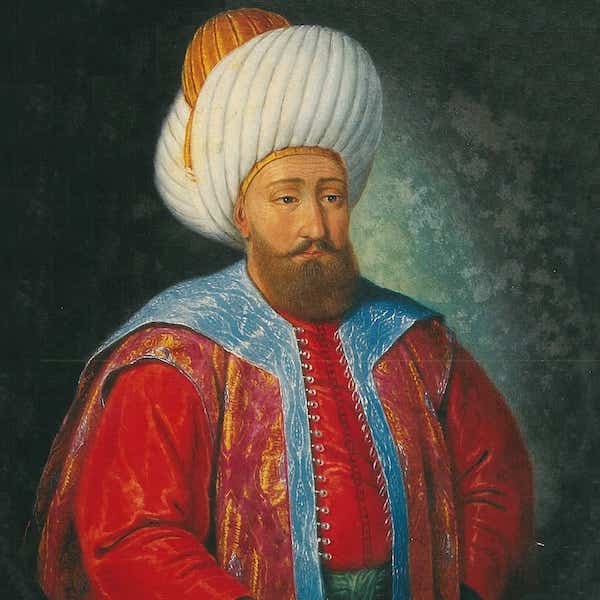
Jerusalem captured by the Ottoman Empire.
Sultan Suleiman the Magnificent builds the city walls of Jerusalem.
British Mandate period following the British victory over the Turks in World War I.
Jerusalem is divided between Israel and Jordan.
After the Six Day War in 1967 Jerusalem reunified under Israeli control.
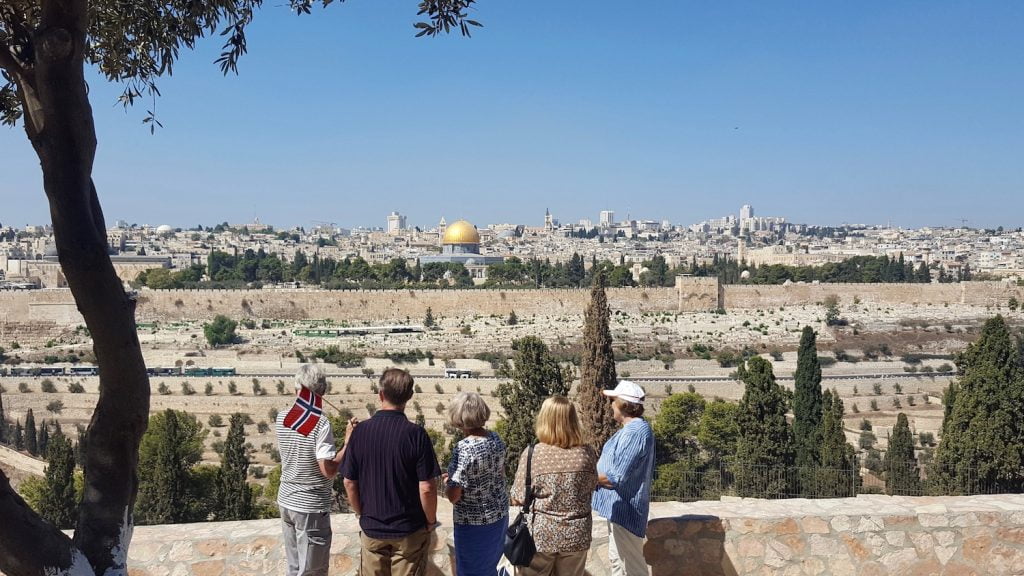
The outlook from the Mount of Olives offers one of the most iconic and breathtaking views of Jerusalem. From this elevated point, visitors gain a deeper understanding of the city’s history and its role as a holy center for faith and tradition.
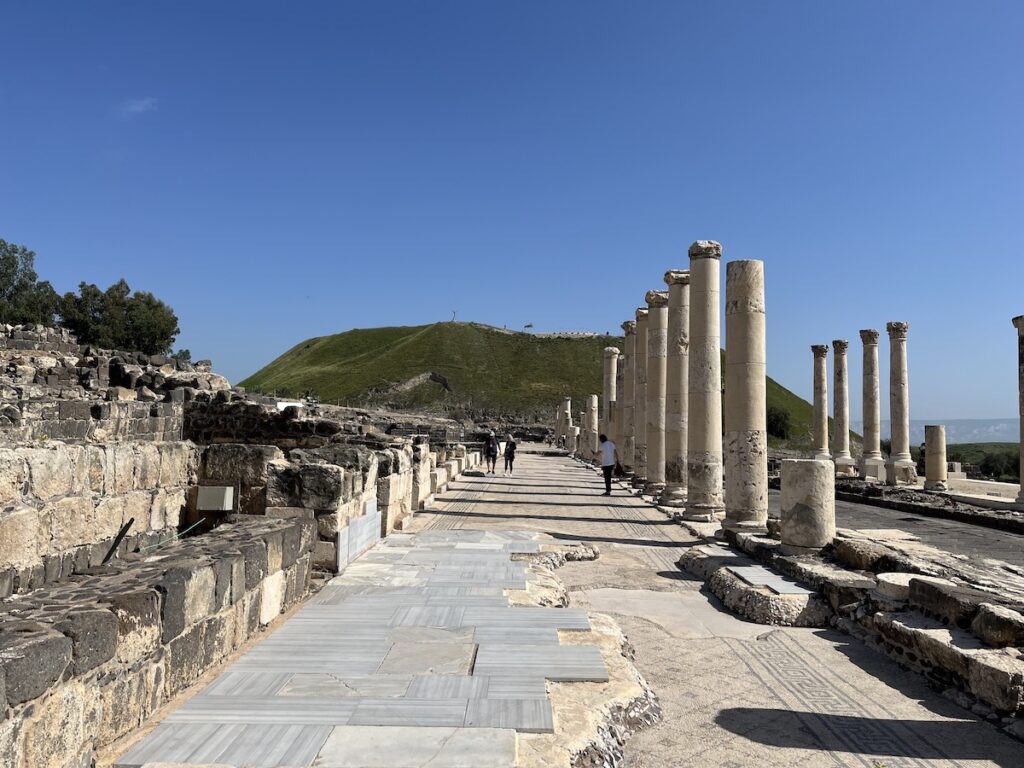
Mount Gilboa rises above the Jezreel Valley as the setting of one of the most dramatic moments in the Bible. According to 1 Samuel 31, it was here that King Saul, wounded in battle and seeing his sons — including Jonathan — lying slain in the valley below, fell on his own sword to avoid capture by the Philistines. Their bodies were later taken and hung on the walls of Bet She’an, visible from the slopes of the mountain.
This event is more than a battlefield tragedy—it marks a pivotal turning point in the biblical story. It reflects the complex relationship between Saul and David, the deep bond between David and Jonathan, and the divine choice to anoint David as the next king of Israel. In the following chapter (2 Samuel 1), David mourns Saul and Jonathan with a heartfelt lament: “How the mighty have fallen…”
This moment also marks the beginning of the rise of the House of David, the royal lineage of Israel’s future kings. Standing at Mount Gilboa, surrounded by the same landscape described in the Bible—the mountain, the valley, and nearby Bet She’an—you can feel the story come alive through the geography and the echoes of the ancient past.