10-Day Israel Guided Tour Itinerary
A guided journey through Israel
This guided 10-day tour through Israel includes travel to and within the country, exploring its key biblical and historical sites. From the serene landscapes of Galilee to the ancient streets of Jerusalem, from Masada and the Dead Sea to Bethlehem, this itinerary connects Scripture, history, and faith in one meaningful journey.
This itinerary is based on a guided tour experience.
10-Day Israel Guided Tour Itinerary
Arrival in Israel
Day 1
Today marks the beginning of our journey to Israel. After a long flight, there will be time to rest and prepare for the days ahead, filled with anticipation for what lies ahead.
First Night in Israel
Day 2
Upon arrival in Israel, the journey continues north to a hotel along the Mediterranean coast near Tel Aviv. After check-in, the afternoon offers free time to walk along the shore, enjoy the fresh sea air, or simply relax.
Caesarea, Mount Carmel & Nazareth
Day 3
After the first night in Israel, the day begins with a full program of exploration. The first stop is Caesarea,the ancient port city built by Herod along the Mediterranean. Here, the Roman amphitheater, harbor remains, and aqueduct bring the past to life, along with the story of Cornelius and Paul.
The journey continues to Mount Carmel, where Elijah confronted the prophets of Baal. At the Muhraka Monastery, traditionally associated with this event, the setting helps bring the biblical account into focus. From here, the route continues through the wide Jezreel Valley to Tel Megiddo, a site layered with many civilizations.
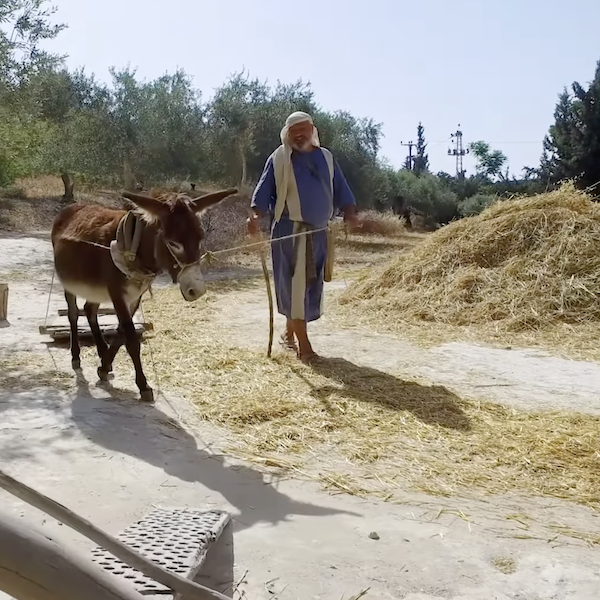
Passing through Nazareth, the visit to Nazareth Village offers a glimpse into daily life in the time of Jesus, with reconstructed settings and live demonstrations.
By evening, arrival at the hotel by the Sea of Galilee brings a quiet and relaxing end to the day.
Galilee & Upper Galilee
Day 4
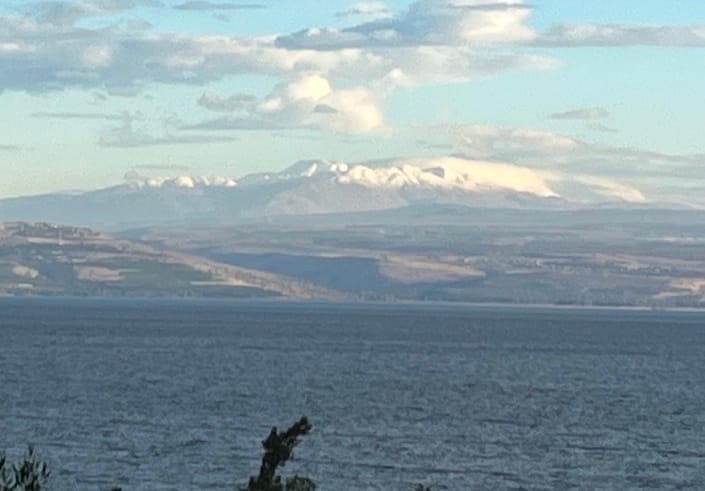
The morning begins by the Sea of Galilee, in surroundings that feel both peaceful and familiar from the Gospel accounts.
Travel continues north to Tel Dan, where nature and archaeology come together. This was once a city belonging to the tribe of Dan, and later the place where King Jeroboam established one of his golden calves, leading the people away from the right path.
At Banias Nature Reserve, identified with Caesarea Philippi, the setting recalls the moment when Jesus asked His disciples, “Who do you say that I am?” and Peter declared, “You are the Messiah.”
Along the way back toward the lake, sites such as Bethsaida and the Mount of Beatitudes come into view.
In Capernaum, known as the center of Jesus’ ministry, the remains of the ancient village provide a connection to the events that took place here.
Continuing along the shore, the visit to the ancient boat at the Yigal Allon Centre in Ginosar offers a tangible link to life on the Sea of Galilee in the time of Jesus.
Later in the day, Magdala reveals its well-preserved remains, including a first-century synagogue and the Magdala Stone, making it one of the most meaningful sites in the region.
The day ends back at the hotel by the Sea of Galilee, with time to relax after a full day.
Sea of Galilee, Jordan River & Dead Sea
Day 5
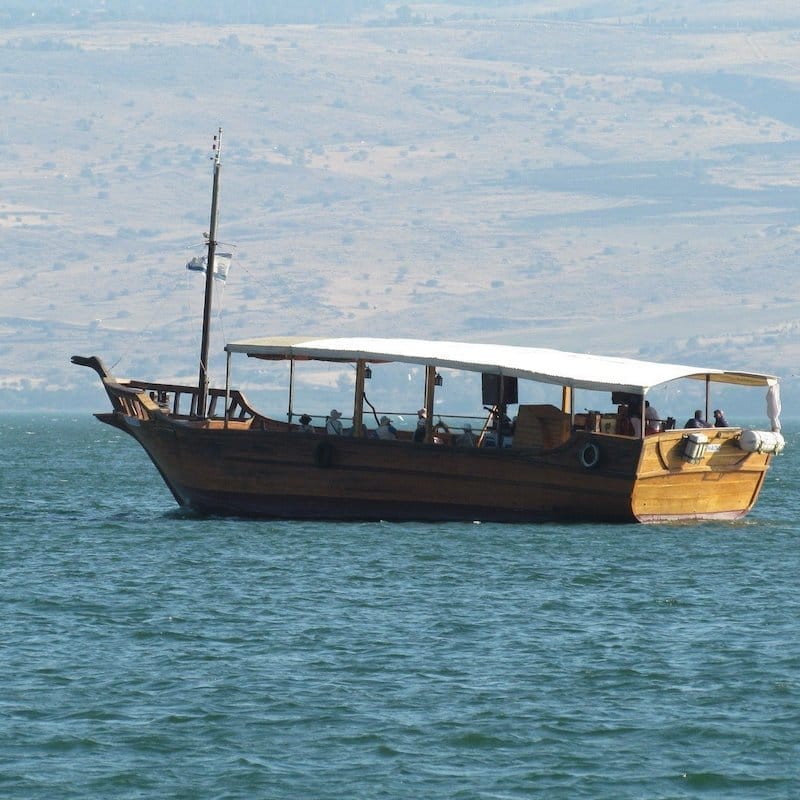
The day begins with a boat ride on the Sea of Galilee, sailing across calm waters and experiencing the landscape where many Gospel events took place.
From the lake, the route heads south to the Jordan River baptismal site at Yardenit, where there is an opportunity to take part in baptism.
Further south, Beit She’an (Scythopolis) stands as one of Israel’s most impressive archaeological sites. Among the ruins is the place where the bodies of Saul and his sons were displayed on the city walls. In the time of Jesus, this city was part of the Decapolis, a group of ten cities shaped by Greek culture.
Travel through the fertile Jordan Valley offers views of modern agriculture alongside ancient history. Jericho appears in the distance, known as one of the oldest cities in the world. Nearby lies Bethany Beyond the Jordan (Qasr el Yahud), the place associated with the baptism of Jesus and the entry of the Israelites into the Promised Land under Joshua.
By evening, arrival at the Dead Sea brings time to relax and enjoy its unique mineral-rich waters, followed by dinner and rest.
Masada, Ein Gedi, Qumran & Abraham’s Tent
Day 6
The day begins with an ascent by cable car to Masada, the dramatic desert fortress overlooking the Dead Sea. At the top, the story of the Jewish rebels and their final stand against Rome brings this powerful site to life.
From here, the journey continues to Ein Gedi, a lush oasis on the western shore of the Dead Sea. Surrounded by desert, the flowing water and greenery create a striking contrast. This is the place where King David hid from Saul, adding a biblical layer to the natural beauty.
Next comes a visit to Qumran, where the Dead Sea Scrolls were discovered. The site offers insight into one of the most important archaeological finds connected to the Bible.
In the afternoon, the experience shifts to Genesis Land, where a visit to Abraham’s Tent brings the world of the patriarchs into focus. Through traditional hospitality, food, and a setting that reflects ancient life, the past becomes tangible in a simple and engaging way.
By evening, the journey continues up to Jerusalem, where the group settles in for the next four nights.
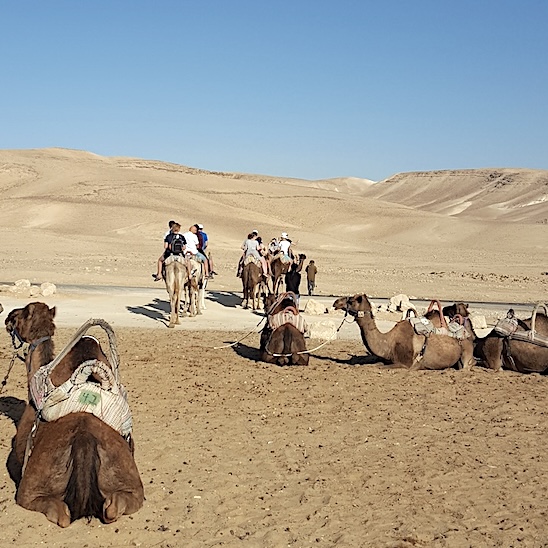
The group visiting Abraham’s Tent at Genesis Land
Mount of Olives, Gethsemane, Last Supper Room & Bethlehem
Day 7
The day begins on the Mount of Olives, offering a magnificent view over Jerusalem. From here, walking down toward the Garden of Gethsemane, the path passes the Jewish cemetery and Dominus Flevit, a church marking the place where Jesus wept over Jerusalem.
At the Garden of Gethsemane, we reflect on the place where Jesus prayed before His arrest, among olive trees like the ones visible there today.
From here, the route continues to Mount Zion, where we visit the Upper Room, traditionally associated with the Last Supper, located just outside the Old City walls in a building that also contains King David’s Tomb.
In the afternoon, we conclude the day in Bethlehem with a visit to the Church of the Nativity, one of the oldest churches in the world, built over a cave believed to be the birthplace of Jesus, and Shepherds’ Fields, where the shepherds received the angelic announcement of His birth.
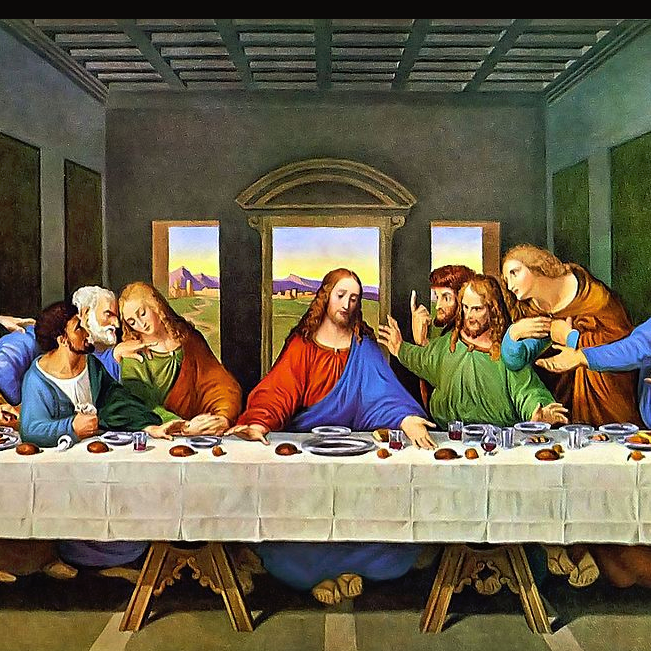
Full Day in the Old City
Day 8
The day begins at the Western Wall tunnels. The tunnels reveal a section of the western wall hidden for centuries beneath Jerusalem. Walking through these passageways feels like stepping into a time tunnel, where stones laid by King Herod still stand in place.
From the tunnels, we come back to the Wailing Wall itself, the exposed section of the retaining wall of the Temple Mount, where we reflect on centuries of Jewish prayer and devotion.
Next, we explore the Temple Mount, where the Dome of the Rock stands today. This site is where the Jewish Temple stood before it was destroyed by the Romans, and it is also Mt. Moriah, the place of the binding of Isaac.
On our way out, we stop at the Pools of Bethesda. Here Jesus healed a man who had been paralyzed for thirty-eight years. Next to the pools stands St. Anne’s Church, one of the oldest and best-preserved churches in Jerusalem.
The journey continues to the Monastery of the Flagellation, located at the beginning of the Via Dolorosa, in front of where the Antonia Fortress once stood, associated with the Judgment Hall of Pilate. Here, we consider the events of Jesus’ trial, His presentation to the crowd, and His suffering before the crucifixion.
From the monastery, we follow the Via Dolorosa along the streets where Jesus carried the cross, leading to the Church of the Holy Sepulcher, the traditional site of Golgotha, the place of the skull, and the tomb where He was buried and resurrected.

Garden Tomb, House of Caiaphas, Southern Wall Excavations, Yad Vashem & Tower of David
Day 9
The day begins at the Garden Tomb, a first-century tomb like the one described in the Bible. Surrounded by a serene garden with pine trees, the setting offers a peaceful place for reflection. Here, we celebrate the resurrection with communion and a time of praise.
Next, we visit the Church of St. Peter in Gallicantu, built over the high priest Caiaphas’ residence. This is the place where Jesus was held the night before His trial.
Later, we explore the Southern Wall Excavations of the Temple and the Davidson Center, seeing the steps that led to the Temple and the purification pools used in Jesus’ time.
Today we also visit Yad Vashem, the Holocaust Museum, reflecting on the history and suffering of the Jewish people.
The day concludes with the Light and Sound show at the Tower of David Museum, offering a vivid presentation of Jerusalem’s history.

Departure & Return Home
Day 10
After a rich and memorable journey through Israel, the group travels to Tel Aviv Airport for the flight homeward, concluding an experience filled with history, culture, and meaningful reflections across the land of the Bible.

