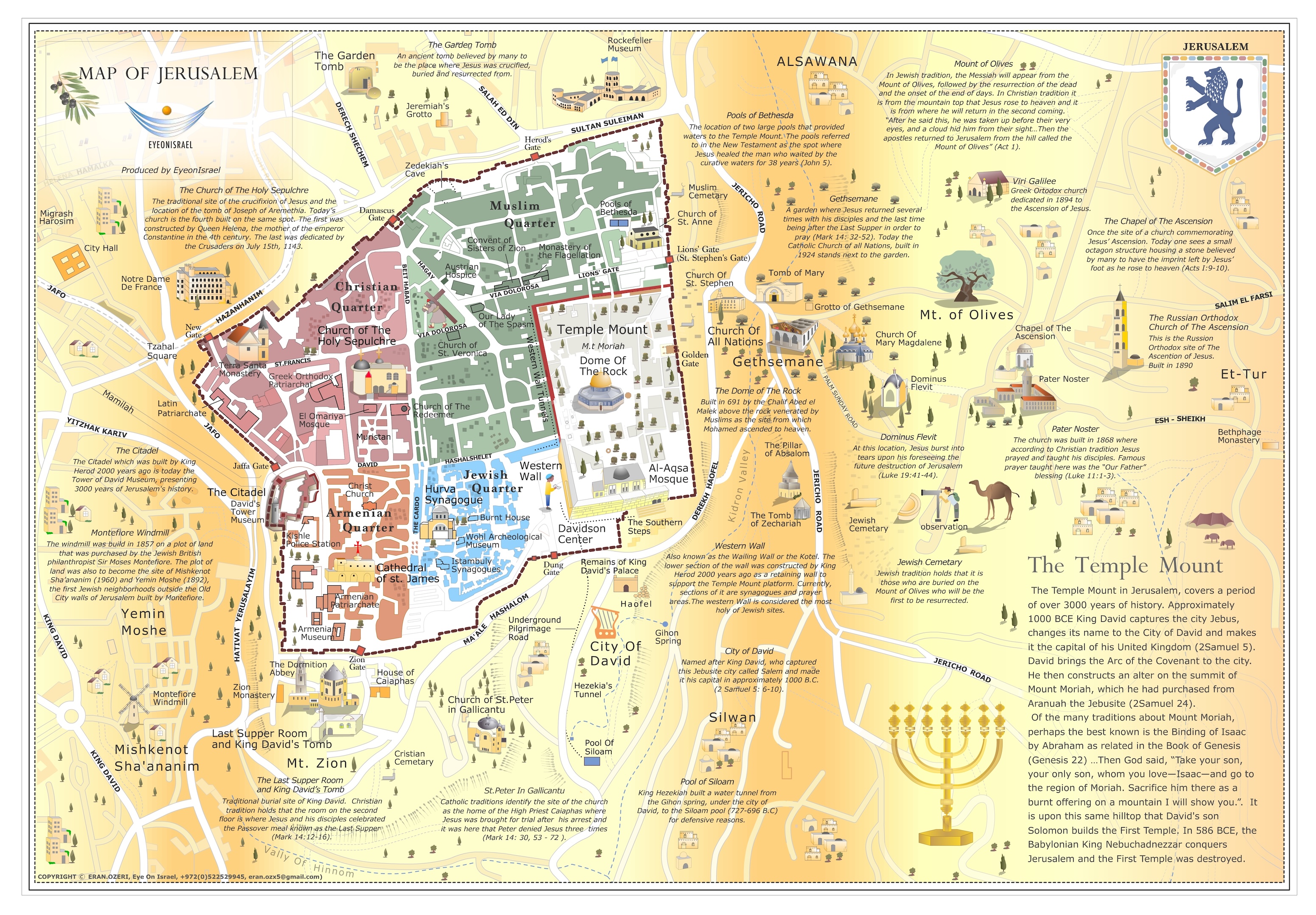
Jerusalem Map – The Old City and Surrounding Areas

This Jerusalem map highlights the Old City and surrounding areas through the lens of religions, history, and archaeology. If you’re planning a tour to Israel, this is an excellent place to start. Explore sacred sites, ancient streets, and cultural landmarks that reflect the city’s rich past and living heritage. Whether you’re a visitor, student, or curious traveler, this map will help you better understand Jerusalem’s layered identity.

The Western Wall

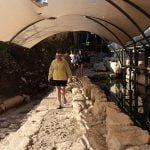
Western Wall Tunnels

Dome of the Rock

The Holy Sepulchre

Gethsemane

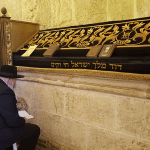
King David’s Tomb

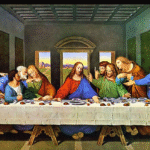
Last Supper Room

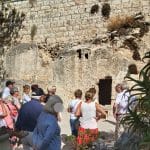
The Garden Tomb

City of David

The Hurva Synagogue

St. Peter in Gallicantu

Tower of David

Davidson Center

Jewish Cemetery

The Burnt House

Sephardic Synagogues

The Cardo

The Southern Steps

Wohl Museum

Flagellation

Station 7

Sisters of Zion

Herod’s Palace

Armenian Quarter

Interactive map of Jerusalem Old City with religious and historical landmarks

The Western Wall

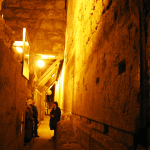
Western Wall Tunnels

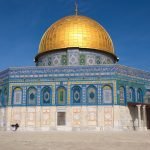
The Dome Of The Rock

The Holy Sepulchre

Gethsemane

King David’s Tomb

The Last Supper Room

The Garden Tomb

The City Of David

Church of St. Peter in Gallicantu

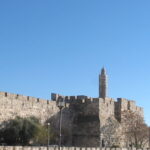
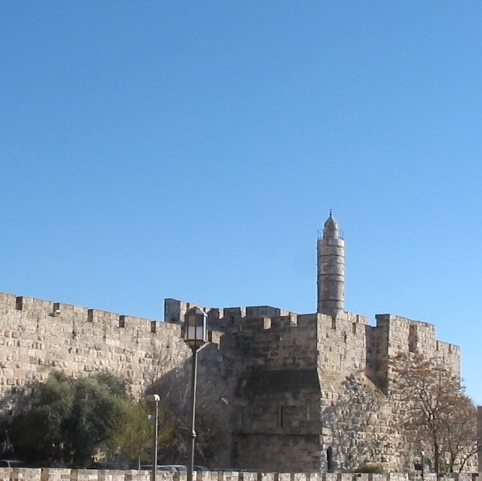
Tower of David Museum

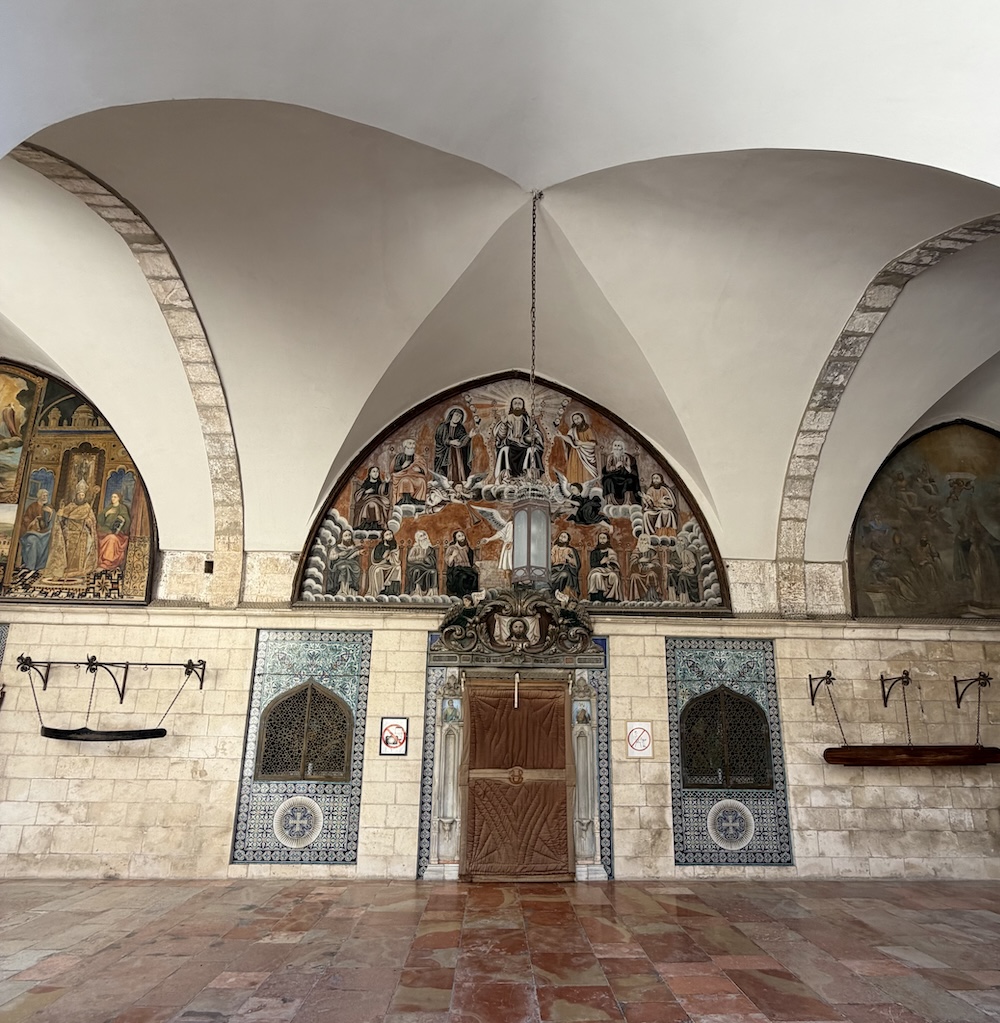
the Armenian Quarter & St. James Cathedral

The Jewish Cemetery

Herod’s Palace

The Walls

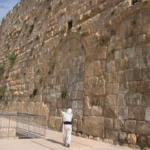
The Walls of the Old City were built by the Ottoman sultan Suleiman the Magnificent in the mid-16th century. The walls are about 4 km long and 12 meters high.

Tomb of Mary

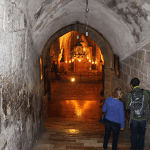
The Tomb of Mary is a Greek Orthodox and Armenian Apostolic church, believed to be the burial place of the Virgin Mary, the mother of Jesus. The church is built underground and features a long stone staircase leading to the ancient crypt.

Mount of Olives

Google Map with Floating Carousel

Site 1

The Western Wall

The Western Wall, also known as the Wailing Wall or Kotel, is one of the holiest sites in Judaism. The lower section of the wall was built by Herod the Great in the 1st century BCE as part of his grand expansion of the Second Temple in Jerusalem. While the Temple Mount had already been the spiritual and cultural center of Jewish life since the time of King Solomon, who built the First Temple nearly 1,000 years earlier, Herod significantly enlarged and reinforced the structure, creating the vast platform that remains today.

The wall stretches approximately 488 meters (1,601 feet), though only a portion is visible above ground. It is revered as the closest accessible point to the Holy of Holies, the most sacred part of the ancient temple.

For centuries, Jewish worshippers have gathered at the wall to pray, mourn the destruction of the temple in 70 CE by the Romans, and place written prayers in its cracks. The prayer area is divided into separate sections for men and women, following Orthodox Jewish tradition.

Today, the Western Wall remains a major pilgrimage site and a focal point for religious and national ceremonies, including bar mitzvahs, Jewish holidays, and Israeli military inductions. While it is a sacred site for Jews, it is also visited by people of all faiths, symbolizing both religious devotion and historical continuity.

Site 2

The Western Wall Tunnels

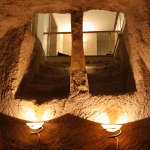
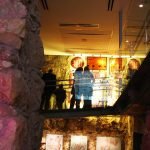
If you are planning a visit to the Western Wall, you may want to include the Western Wall Tunnels as part of your experience. Walking through these passageways feels like stepping into a time tunnel, where stones laid by King Herod still stand in place, hidden for centuries beneath the Old City. The tunnels reveal parts of the Second Temple complex that cannot be seen from the plaza above, making the history and tradition of this sacred place come vividly to life.

Excavations here are especially meaningful because digging on the Temple Mount itself is not possible. Until 1967, both this site and the Old City as a whole were under Jordanian control and inaccessible to Israel. For the Jewish people, and many others, the tunnels represent both an archaeological discovery and a deep expression of connection to history and heritage. For Christians, it is quite literally walking in the footsteps of Jesus, as the tunnels bring you down to the level of the streets that once ran alongside the Temple Mount — the very paths where Jewish pilgrims of his time would have walked.

The tour itself adds to the experience: narrow stone corridors, dimly lit walkways, and the sense of being surrounded by massive ancient blocks make the history feel tangible. Every turn in the passage reminds visitors how close they are to the very foundations of Jerusalem’s holiest site.

The tunnels expose the full length of the Western Wall, extending 485 meters, far beyond the 70 meters visible in the prayer area. Visitors can see massive Herodian stones, including the Western Stone, which is 14 meters (46 feet) long and weighs around 570 tons, one of the largest building stones in the world.

A significant stop in the tunnels is the closest point to the Holy of Holies, where many Jewish visitors come to pray. The tunnels also contain the Hasmonean Water Channel, an ancient aqueduct that once supplied water to Jerusalem, and the Struthion Pool, a large reservoir from the Second Temple period later covered by the Romans.

Ancient passageways, streets, and structures from different historical periods, including the Roman and Crusader eras, are also visible throughout the tunnels. Interactive 3D models and multimedia exhibits help bring the ancient city to life.

A newly opened tour, The Great Bridge Route, allows visitors to walk along a reconstructed section of an ancient bridge that once led directly into the Second Temple. This bridge was used by pilgrims and high-ranking officials, offering a glimpse into the grandeur of Jerusalem during the Second Temple period.

Access: The entrance to the tunnels is just to the left of the Western Wall plaza, near the covered area with security. Entry is only possible with a guided tour, which must be reserved in advance through the official website or at the visitor center (same-day availability is limited).


Site 3

The Dome of the Rock

If you are anywhere near the Old City of Jerusalem, you’ve most likely noticed the golden dome rising above the skyline. The Dome of the Rock is not only a landmark for the city today but also one of the oldest surviving Islamic monuments. Completed in 691 CE by the Umayyad Caliph Abd al-Malik, it represents a masterpiece of early Islamic architecture.

The shrine stands on the Temple Mount — known to Muslims as Haram al-Sharif — a site sacred to Muslims, Jews, and Christians. For Muslims, it is believed to mark the place where the Prophet Muhammad ascended to heaven during the Night Journey.

For Jews, the Foundation Stone at the heart of the Dome of the Rock is traditionally believed to be where Abraham prepared to sacrifice his son Isaac, and it is closely associated with the location of the First and Second Temples. However, the exact spot where the Jewish Temples once stood is still debated. No archaeological excavations have been carried out on the Temple Mount due to the site’s religious and political sensitivity, leaving many historical questions unanswered.

Non-Muslims are not allowed to enter the Dome of the Rock, but they can view it from the outside during Temple Mount visiting hours, which are typically Sunday to Thursday, from 7:30 AM to 10:30 AM and again from 12:30 PM to 1:30 PM (subject to change on holidays or due to security reasons).

Visitors must wear modest clothing (covering arms and legs), pass through a security check, and are asked not to display religious symbols or engage in prayer on the site.

Site 4

Church of the Holy Sepulchre

The Church of the Holy Sepulchre, located in Jerusalem’s Christian Quarter, is one of the most important Christian sites in the world. According to tradition, it marks the places where Jesus was crucified, buried, and resurrected. The church was originally built in the 4th century CE by Emperor Constantine the Great, after his mother, Helena, identified the site and is said to have discovered the True Cross.

Over the centuries, the church has been damaged and rebuilt multiple times, with the Crusaders carrying out the last major reconstruction in the 12th century.

Today, it stands as a complex and sacred space, shared by several Christian denominations — including the Greek Orthodox, Armenian Apostolic, and Roman Catholic churches — each of which controls different parts of the building. This delicate arrangement, known as the Status Quo, has shaped the daily life and traditions inside the church for centuries.

Most of the sites within the Church of the Holy Sepulchre are based on Christian tradition and serve as symbolic representations of events described in the New Testament. Many of these traditions were first identified during the 4th century by Empress Helena, mother of Emperor Constantine, who is credited with locating key places related to the Passion of Jesus and overseeing the construction of the original church. Some additional traditions and chapels were established later, as Christian devotion and liturgical needs evolved over the centuries.

Two sites stand out as especially significant:

Golgotha (Calvary) is widely regarded by scholars and archaeologists as the most likely location of the crucifixion, based on historical, topographical, and textual evidence. It was outside the city walls during the Second Temple period, near a main gate, and adjacent to a known quarry — all consistent with Gospel descriptions.

The Tomb of Jesus, located inside the Aedicule, was originally part of a rock-cut cave, consistent with Jewish burial practices of the time. While the exact identification cannot be confirmed, recent archaeological research supports the likelihood that this area was part of a Jewish cemetery from the 1st century CE, adding credibility to the traditional location.

Visitors should understand that the church blends historical memory, faith, and tradition, making it one of the most important pilgrimage destinations in Christianity — even if not every detail can be verified with certainty.

Golgotha (Calvary)

The place of the crucifixion is on Golgotha, the traditional site where Jesus was crucified. When you enter the Church of the Holy Sepulchre, go up the stairs to your right to reach this upper level, built directly above the Rock of Calvary.

There are two adjacent chapels, both situated above the exposed rock:
On the left, the Greek Orthodox Chapel of the Crucifixion marks the 12th Station of the Cross, where Jesus died on the cross.
On the right, the Catholic (Franciscan) Chapel marks the 11th Station of the Cross, where Jesus was nailed to the cross.

Between the two chapels, near the top of the stairs, stands a statue of the Virgin Mary, marking the 13th Station of the Cross — the place where, according to tradition, Jesus was taken down from the cross by Joseph of Arimathea (Luke 23:53).

Beneath Golgotha, accessible from the main floor of the church, is the Chapel of Adam. According to Christian tradition, this is where the skull of Adam, the first man, was buried. A crack in the rock, visible through a glass panel, symbolizes the belief that Christ’s blood ran down the cross and fell onto Adam’s grave — linking the crucifixion to the redemption of humanity.

The Tomb of Jesus (The Aedicule) 

At the center of the Church stands the Aedicule, a small structure built over what is traditionally considered the tomb of Jesus. The current Aedicule was reconstructed in the early 19th century and underwent conservation work in 2016. According to tradition, this was the burial site provided by Joseph of Arimathea.

The tomb itself is inside a small chamber within the Aedicule. Visitors usually wait in line to enter the inner room, where they can see the stone slab marking the burial place. Entry is brief, and only a few people are allowed inside at a time.

Archaeological studies suggest that the tomb was originally part of a rock-cut cave, consistent with 1st-century Jewish burial customs. Excavations in the area also indicate that this was likely a Jewish cemetery during the Second Temple period.

The Stone of Anointing

Near the entrance, directly in front of you as you enter the church, lies the Stone of Anointing. This stone slab is traditionally believed to be the place where Jesus’ body was laid and prepared for burial after the crucifixion.

The current stone dates to the 19th century, but the location has been venerated since the Crusader period. The site is often surrounded by lamps and decorated by icons, and many pilgrims pause here to touch the stone or place objects on it for blessing.

The Tomb of Joseph of Arimathea

In a small side chapel near the Aedicule is a rock-cut tomb traditionally associated with Joseph of Arimathea, the man who, according to the Gospels, provided the burial place for Jesus. The exact identification is uncertain, but the site — which is included within the complex — is part of a Jewish cemetery from the Second Temple period, according to archaeological findings.

The Catholicon

This is the main domed area of the church and serves as the central worship space for the Greek Orthodox community.

Chapel of St. Helena and the Chapel of the Invention of the Cross

 Located in the lower part of the Church of the Holy Sepulchre, these connected chapels are dedicated to St. Helena, the mother of Emperor Constantine. According to tradition, St. Helena traveled to Jerusalem in the 4th century and is credited with discovering the True Cross — the cross upon which Jesus was crucified.

The Chapel of St. Helena houses ancient cisterns believed to be the water source used by Helena during her stay in Jerusalem. The adjacent Chapel of the Invention of the Cross contains relics and displays related to the finding of the True Cross. The term “Invention” here means “discovery.”

These chapels are an important pilgrimage site, highlighting the connection between early Christian devotion and the physical locations tied to Jesus’ crucifixion and burial.

Site 5

Gethsemane

At the foot of the Mount of Olives in Jerusalem lies the Garden of Gethsemane, a site of profound spiritual and emotional depth in Christian tradition. The name “Gethsemane” comes from the Hebrew Gat Shemanim, meaning oil press,” indicating its connection to the olive groves that still surround the area today.

The Biblical Story

According to the Gospels (e.g., Matthew 26, Mark 14, Luke 22), this is the place where Jesus came to pray on the night before his crucifixion, after the Last Supper. In deep anguish, he asked his disciples to stay awake with him and prayed, “Not my will, but Yours be done.” It was also here that Jesus was betrayed and arrested, marking the beginning of his Passion.

The Church of All Nations

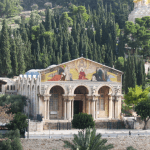
Also known as the Basilica of the Agony, the church was built in the 1920s over the rock traditionally believed to be the spot where Jesus prayed that night. Designed by Italian architect Antonio Barluzzi, the church is supported by twelve domes—representing the twelve nations that contributed to its construction—hence its name. The interior is kept dim to reflect the somber mood of that night, with stained-glass windows in violet and blue and a mosaic above the altar depicting Christ in agony.

The exposed rock in front of the altar is a focal point for visitors and pilgrims, inviting silent reflection and prayer.

The Garden Today

Just outside the church, the ancient olive trees, some dating back over a thousand years, connect the modern visitor to the living landscape of the Gospels. The garden is small, enclosed, and carefully maintained by the Franciscan order.

High Season & Crowds: Gethsemane is a major Christian pilgrimage site, so expect large crowds and long lines, particularly inside the Church of All Nations. If you prefer a quieter experience, aim to arrive in the early morning, just after opening time.

Parking: There is very limited parking near the site. It’s best to arrive by organized tour bus, taxi, or public transportation. If you’re driving, consider parking farther away (e.g., at the Mount of Olives or near the Old City) and walking.

Modest Dress Required: As in most Christian holy sites, modest attire (covering shoulders and knees) is required to enter the church. 

Opening Hours: Typically open daily from 8:00 AM to 12:00 PM and 2:00 PM to 5:00 PM, but hours may vary—especially on holidays or for special events.

Site 6

King David’s Tomb

If you are planning a day tour in the Old City, consider starting with the Tomb of King David together with the Last Supper Room. Finding parking nearby can be challenging, but if you arrive by taxi, it is very close. For groups traveling by bus, there is a convenient drop-off point nearby.

The site known as the Tomb of King David is located on Mount Zion, just outside Jerusalem’s Old City walls. Inside a medieval building stands a sarcophagus dating back to the Crusader period, likely made for a Crusader noble or king.

While Jewish tradition holds this site as King David’s tomb and it has been an important place of pilgrimage for centuries, the sarcophagus itself is not the original burial chamber. Some visitors mistakenly believe the sarcophagus is the actual tomb, but it is a later monument.

Archaeological evidence and historical texts suggest that this location could be connected to ancient burial sites dating back to the First Temple period. The site shows layers of construction from the Second Temple, Byzantine, and Crusader periods, highlighting its long-standing significance.

However, the Bible states that King David died and was buried in the City of David, which can cause some confusion about the exact location of his tomb.

The ancient historian Josephus described a monumental tomb built by Herod, traditionally associated with David’s family, located nearby.

Notably, Prof. Michael Avi-Yonah, who designed the famous Second Temple Model of Jerusalem, identified the Tomb of David with the traditional site on Mount Zion—aligning it with Josephus’ description. 

Whether this is the exact historical burial place or not, the fact that people have worshiped and honored this site for centuries is significant. It affirms King David’s lasting presence in religious and cultural memory. In Christianity, the House of David is also central as the lineage of Jesus.

Opening Hours:

Sunday to Thursday: 8:00 AM – 6:00 PM

Friday: 8:00 AM – 1:00 PM

Closed or with limited access on Jewish holidays and Saturdays.

Entrance:

Free of charge.

No tickets or reservations required.

Dress Code:

Modest clothing is required.

Men are asked to cover their heads (kippahs are available at the entrance).

Women should wear attire that covers shoulders and knees.

Etiquette:

Separate areas for men and women at the tomb chamber.

Photography is generally allowed but should be respectful.

Please be quiet and respectful, as it is an active religious site.

Site 7

The Last Supper Room

If you’ve just visited the Tomb of King David or started your tour at the Room of the Last Supper, you may be wondering how these two very different biblical stories—separated by more than a thousand years—are remembered in the same building.

It’s important to understand that the structure we see today was built in the medieval period, during the time of the Crusades. While the current building does not date back to biblical times, it stands on a site that has been associated with both stories through centuries of tradition.

According to Jewish tradition, this location has long been identified as the Tomb of King David. Meanwhile, since the Crusader period, Christian tradition has linked the upper floor of the same structure to the Upper Room, where Jesus is believed to have shared the Last Supper with his disciples.

Of course, we cannot be certain that this is the exact location of either event. The present-day building is not the original, but the site itself—the location on Mount Zion—may have been remembered and preserved through generations of tradition. These traditions do not necessarily confirm the physical authenticity of the space, but they reflect how people have understood and honored the biblical past over time.

At the same time, it’s important to recognize that holy sites like this can also become points of religious and political tension. The Vatican has in the past made efforts to gain ownership or custodial rights over the Upper Room, while some Jewish ultra-Orthodox groups have advocated for greater control of the Tomb of David located below. These overlapping claims reflect the deep significance the site holds for both faiths—but also the challenges that can arise when tradition, faith, and heritage are closely tied to physical places.

Christian Tradition and the Upper Room

In Christian tradition, the Upper Room (also called the Cenacle) is believed to be the site of several key New Testament events. Most notably, it is where Jesus celebrated the Last Supper with his disciples before his arrest and crucifixion.

But the tradition extends beyond that. After Jesus’ resurrection, his disciples are said to have returned to the same place. On the day of Pentecost, while they were gathered together—again, traditionally believed to be in the Upper Room—they experienced a moment described in Acts 2: the Holy Spirit descended upon them in what appeared to be tongues of fire, enabling them to speak in many languages and begin preaching publicly.

This moment is often considered the beginning of the Christian Church, when the message of Jesus began to spread beyond his immediate followers.

The Gospels mention that Jesus instructed his disciples to prepare the Passover meal in a “large upper room” (Mark 14:15; Luke 22:12). Early Christian traditions described this space as part of a well-built home—sometimes referred to as a mansion—located in or near Mount Zion. That association helped anchor the tradition at this site, even though the current building dates to the Crusader period.

The Garden Tomb

Site 8

Entering the Garden Tomb feels like stepping into a different world—quiet, green, and open to the sky. The beautifully maintained garden and its calm, natural atmosphere offer a striking contrast to the experience of walking through the dark, crowded halls of ancient churches built over sacred sites. Here, surrounded by pine trees, flowers, and stone paths, it’s easy to imagine the biblical story unfolding in a simpler setting.

Located just outside the Old City near Damascus Gate, the site was identified in 1883 by British General Charles Gordon, who believed a nearby rocky cliff resembled a skull—possibly the biblical Golgotha, the “Place of the Skull.” Today, the Garden Tomb invites visitors to pause, reflect, and consider the meaning of the Resurrection in a peaceful and contemplative environment.

At the time, many Protestants doubted the authenticity of the Church of the Holy Sepulchre, in part because it lay within the current city walls. In Gordon’s time, it was not yet known that the location of the Church had actually been outside the city walls during the Second Temple period — a fact later confirmed by the discovery of remains of Jerusalem’s ancient wall from the time of Jesus, which followed a different route than today’s walls. This uncertainty helped fuel interest in Gordon’s alternative proposal for the site of Jesus’ burial and crucifixion.

The Garden Tomb features a rock-cut burial chamber with elements similar to those described in the New Testament, such as a groove for a rolling stone and inner burial niches. However, archaeological studies suggest the tomb itself dates to the Iron Age, making it older than the time of Jesus and likely not the actual tomb.

Today, guides at the Garden Tomb do not claim with certainty that this is the authentic burial place of Jesus. Instead, they emphasize that the site “could have been”, and focus more on the symbolic meaning of the place and the message that “He is risen”, which is central to Christian belief. The peaceful atmosphere and garden setting provide a meaningful space for visitors to reflect, pray, and experience the Resurrection story in a contemplative environment.

Opening Hours: Monday to Saturday, 8:30 AM – 12:00 PM and 2:00 PM – 5:30 PM. Closed on Sundays.

Entrance: Free of charge.

Guided Tours: Available in multiple languages.
Groups must book in advance through the Garden Tomb’s official website.

Facilities: Gift shop, restrooms, shaded seating areas.

Dress Code: Modest clothing is recommended out of respect for the site’s religious nature.

The City of David

Site 9

The City of David is an archaeological site and national park offering a glimpse into Jerusalem’s earliest days. It includes significant archaeological finds such as ancient fortifications, water systems like Hezekiah’s Tunnel, and the Pool of Siloam. The site offers insights into the early development of Jerusalem and its significance in Jewish history. Today, it is a popular tourist destination and a focal point for archaeological research.

Established around a natural spring over 3,000 years ago. This spring, the Gihon Spring, is still visible today and was a major factor in making Jerusalem a strategically important city.King David conquered the city, then called Jebus, around 1000 BCE. He renamed it Jerusalem and made it the capital of the united kingdom of Israel.

Hezekiah’s Tunnel: This 2,700-year-old water tunnel is an engineering marvel. Walk through the waist-deep water (be prepared to get wet!) or take the dry route and experience this ancient passage.

Warren’s Shaft: Descend into this vertical shaft, originally used to access the Gihon Spring, a vital water source for Jerusalem.

The Pool of Siloam: This ancient pool was fed by Hezekiah’s Tunnel and used for religious rituals.

Large Stone Structure: Some archaeologists believe it was a palace built by King David, See the massive stone foundations and ponder its mysteries.

Pilgrimage Road: Uncover a recently excavated 2,000-year-old road. Imagine pilgrims walking this path on their way to the Second Temple. Explore its well-preserved sections and imagine the bustling life of Jerusalem in this era.

Practical Details:

If you intend to visit the City of David, know that you must book a day and time for your visit. The site is very busy all year round, so it’s best to plan well in advance.

If you want to walk through Hezekiah’s Tunnel, be prepared for a dark, narrow passage. Wear shoes suitable for water, and bring a flashlight — these are usually available for purchase at the site itself.

The Hurva Synagogue

Site 10

The Hurva Synagogue, one of Jerusalem’s most significant Jewish landmarks, was originally built in 1700 by Rabbi Yehudah Hachasid’s followers but was destroyed by Ottoman authorities in 1720 due to unpaid debts. Rebuilt in 1864 as Beit Yaakov, it became the main Ashkenazi synagogue in Jerusalem. The synagogue was demolished by the Jordanians during Israel’s War of Independence in 1948. In 2000, a reconstruction project began to restore it to its 19th-century design. Completed in 2010, the replica preserves its historical and religious significance. Today, the Hurva serves as a place of worship, study, and a symbol of Jewish resilience.

Church of St. Peter in Gallicantu

Site 11

The Church of St. Peter in Gallicantu is a Roman Catholic church on Mount Zion in Jerusalem, built on the traditional site where Jesus was held after His arrest and where Peter denied Him three times before the rooster crowed (Luke 22:61). The name Gallicantu means “cock’s crow” in Latin.

The church stands over ruins believed to be the house of the high priest Caiaphas, where Jesus was interrogated before His trial. Beneath the church is a deep stone pit, thought to be the prison where Jesus was held overnight after His arrest in the Garden of Gethsemane. The pit has carved-out handholds, suggesting it was used as a holding cell. Many pilgrims visit this solemn site, reflecting on the suffering Jesus endured before His crucifixion.

Built in 1931, the church features stunning mosaics, stained glass windows, and a breathtaking view of the Kidron Valley and the Old City of Jerusalem. It remains an important pilgrimage site, commemorating Peter’s repentance and Jesus’ final hours before His trial.
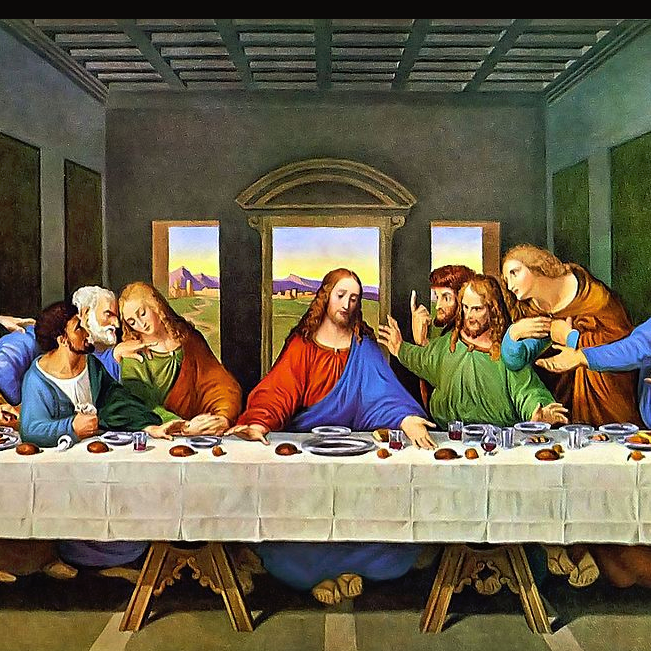
At this site, there is a dedicated parking area for both private cars and buses; parking is allowed only for the duration of your visit. Because of this, many groups with buses choose to visit the site separately from their tour of the Old City. If you plan to combine your visit with nearby sites such as the Last Supper Room or David’s Tomb, be aware that reaching the church involves a steep walk down and back up, which can be strenuous for some visitors.

Tower of David Jerusalem Museum

Site 12

The Tower of David Jerusalem Museum is a cultural institution located in the ancient Citadel near the Jaffa Gate, a main entrance to Jerusalem’s Old City. The Citadel itself is a historical monument, with much of its structure built by King Herod about 2,000 years ago as a military fortress. Over the centuries, it was expanded and modified by successive rulers, including the Crusaders, Mamluks, and Ottomans.

The museum offers a comprehensive journey through 4,000 years of Jerusalem’s history, from its Canaanite roots to modern times. It uses innovative exhibitions, archaeological remains, and interactive displays to tell the story of Jerusalem as a spiritual, political, and cultural center.

  • Historical exhibitions featuring artifacts, ancient maps, models, and multimedia presentations that trace the development of Jerusalem through time.
  • Archaeological remains inside the Citadel, including ruins from the First Temple period, Roman walls, and remnants of Crusader and Ottoman architecture.
  • Immersive digital experiences that bring historical events to life for visitors of all ages.

What Makes It Unique

  • The Citadel itself is a living monument, with layers of history physically built into its walls.
  • The museum regularly hosts cultural events, festivals, and performances, connecting the city’s past with its vibrant present.
  • At night, the museum stages spectacular sound and light shows, projecting the story of Jerusalem onto the ancient stones of the fortress in a mesmerizing visual display.


The Davidson Center

Site 13

The Davidson Center is an archaeological and educational complex within The Jerusalem Archaeological Park. It immerses visitors in the story of Second Temple-era Jerusalem, blending real ruins, ancient artifacts, and virtual reconstructions to reveal the sacred and civic heart of the ancient city.

It is located by the Dung Gate, just a short walk from the Western Wall and the Jewish Quarter, so a visit can easily be combined with these sites.

The center focuses on the southern area of the Temple Mount, where pilgrims would enter the Second Temple. Visitors can experience how ancient worshippers—ordinary people, priests, and even historical figures—approached and interacted with the Temple.

  • The Southern Steps – These original steps served as the main ascent route to the Temple Mount. They are deeply significant not only in Jewish history but also in Christian tradition, as Jesus, like other Jews of his time, would have walked on these very stones when visiting the Temple. This makes the site especially meaningful for Christian visitors, offering a tangible connection to the New Testament narrative.
  • The Hulda Gates – Located at the top of the steps, these now-sealed gates once served as the grand entrances into the Temple Mount. 
  • Robinson’s Arch – This area features the remains of a massive stone arch that supported a monumental bridge leading from Jerusalem’s Upper City into the Temple Mount. At its base is an ancient market street, complete with stone shop stalls and paving stones worn by centuries of foot traffic. Nearby lies a massive fallen cornerstone, believed to have been part of the arch, inscribed with the words “to the place of trumpeting”—thought to mark the spot where priests would announce the Sabbath or holy days. This unique inscription offers a rare and direct link to the ritual life of the Temple.
  • Ritual Baths (Mikva’ot) – Located near the entrances, these were used for purification before entering the sacred Temple area.
  • Indoor Multimedia Exhibits – The Davidson Center’s museum space includes 3D reconstructions of the Temple, digital timelines, and displays of coins, inscriptions, and everyday artifacts from the time of the Second Temple.

The Jewish Cemetery

Site 14

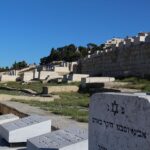
The Jewish Cemetery on the Mount of Olives is the oldest and most significant Jewish cemetery in the world, with burials dating back over 3,000 years. Located on the slopes of the Mount of Olives, directly east of the Old City of Jerusalem, it faces the Temple Mount and holds profound religious and historical importance in Jewish tradition.

Religious Significance

According to Jewish belief, the Mount of Olives will play a key role in the coming of the Messiah and the resurrection of the dead. The Book of Zechariah (14:4) describes the Mount as the place where God will stand on the Day of Judgment. Because of this, generations of Jews have sought to be buried here, hoping to be among the first to rise in the resurrection.

Historical Importance

This cemetery has been in continuous use from biblical times to the present day. It includes the graves of many prominent rabbis, scholars, and public figures, as well as thousands of ordinary individuals. Over the centuries, different sections were added, reflecting periods of Jewish history in Jerusalem.

Some notable individuals buried here include:

Rabbi Avraham Yitzhak HaCohen Kook, the first Ashkenazi Chief Rabbi of British Mandatory Palestine

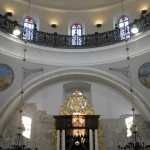
Henrietta Szold, founder of Hadassah, the Women’s Zionist Organization of America, and a key figure in health care and education in pre-state Israel

Eliezer Ben-Yehuda, the reviver of the Hebrew language

Menachem Begin, former Prime Minister of Israel

Preservation and Challenges

The cemetery has faced various challenges, including neglect and vandalism during the 20th century, especially during the Jordanian control of East Jerusalem (1948–1967). Since the reunification of the city, significant efforts have been made to restore and protect the site. Today, it remains an active cemetery, and burial plots are still in use.

The Burnt House

Site 15

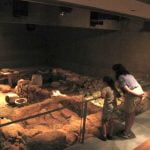
The Burnt House is a small but powerful archaeological museum located in Jerusalem’s Jewish Quarter. It preserves the ruins of a wealthy priestly home destroyed during the Roman destruction of the Second Temple in 70 CE. Excavated beneath street level, visitors can see ash-covered walls, charred beams, household items, and even the skeletal arm of a young woman—silent witnesses to the tragic end of ancient Jerusalem. A short video helps bring the story to life, offering an emotional window into the final days of the city.

Opening Hours:

Sunday to Thursday: 9:00 AM – 5:00 PM

Friday and holiday eves: 9:00 AM – 1:00 PM

Closed on Saturdays and Jewish holidays

Admission: Paid entrance; discounts available for children, students, and groups

The Four Sephardic Synagogues

Site 16

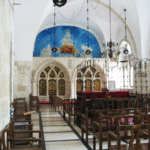
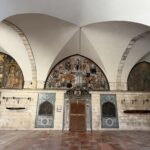
The Four Sephardic Synagogues form a historic complex that served as the spiritual heart of Sephardic Jewry in Jerusalem for centuries. Built between the 16th and 18th centuries, these synagogues—Yohanan ben Zakkai, Istanbuli, Eliahu Ha’navi, and Emtsai (Middle)—were used continuously until 1948, when the Jewish Quarter fell under Jordanian control. After restoration, they once again stand as a testament to the endurance of Jewish life, prayer, and tradition in Jerusalem.

Each synagogue reflects the heritage of different Sephardic communities, with unique architecture, Torah arks, and traditions. Today, they serve both as active places of worship and a museum-like complex that tells the story of Jerusalem’s Sephardic Jews.

Opening Hours:

Sunday to Thursday: 9:00 AM – 5:00 PM

Friday and holiday eves: 9:00 AM – 1:00 PM

Closed on Saturdays and Jewish holidays

Admission: Paid entrance (can be combined with a Jewish Quarter multi-site ticket); discounts available for children, students, and groups

The Cardo

Site 17

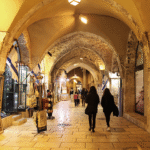
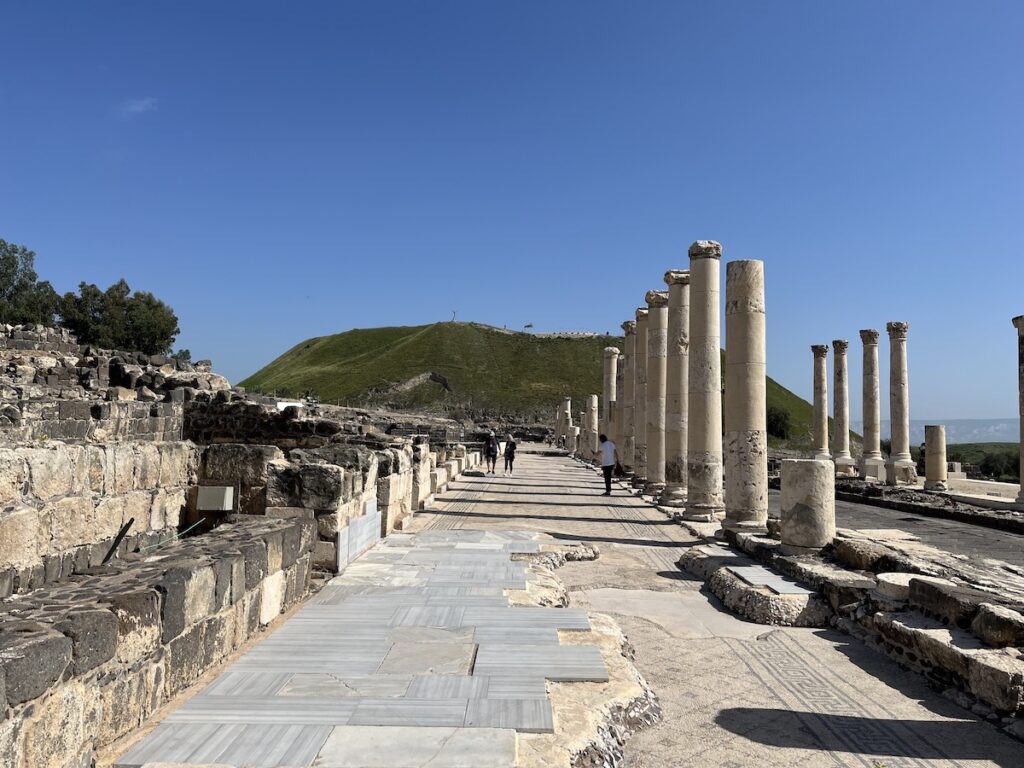
Walking in the Jewish Quarter, you will probably pass by an open lower street with rows of columns. This is part of the Cardo from Roman times. If you take the stairs down and walk straight north along it, you can observe how the street changed through different periods—from Roman to Byzantine and then Crusader. The image here shows the Cardo as uncovered from the Crusader period during archaeological excavations after 1967. Remains of shops from that era were preserved, and today are used as souvenir shops as part of the Jewish Quarter. As you continue further, the Cardo narrows as it becomes part of the local Muslim Quarter.

The Cardo was the main north-south street of Roman and later Byzantine Jerusalem. It was built by Emperor Hadrian after the Bar Kokhba revolt (132–135 CE), when he rebuilt the city as Aelia Capitolina and renamed the province of Judea to Syria Palaestina—a move meant to erase Jewish identity and history.

In the Byzantine period (4th–7th centuries CE), the Cardo was expanded and became a bustling commercial avenue lined with columns, shops, and market stalls. During the Crusader period (12th century), parts of the street were rebuilt and continued to serve as a central marketplace, some of it even roofed.

Today, restored sections of the Cardo allow visitors to walk along the ancient path, where Roman and Crusader remains are integrated with modern stores—offering a vivid window into the city’s layered past.

The name Palestine, as introduced by the Romans, had no actual connection to the ancient Philistines mentioned in the Bible. By Hadrian’s time, the Philistines had long ceased to exist as a distinct people. The Roman emperor chose the name Syria Palaestina—along with renaming Jerusalem as Aelia Capitolina—as a symbolic act intended to suppress the memory of Jewish sovereignty and sever the historical ties between the Jewish people and their land.

The name continued to be used in various forms by later rulers, including the Byzantines, Arabs, Crusaders, and Ottomans. During the British Mandate in the 20th century, it was used as a geographical term for administrative purposes.

The Southern Steps and Hulda Gates

Site 18

The Southern Steps, located at the southern wall of the Temple Mount, were the main entrance for pilgrims ascending to the Second Temple 2,000 years ago. Worshippers would enter through the Hulda Gates—a series of arched gateways named after the prophetess Hulda—and climb these broad, uneven steps in a slow, reflective approach toward the holy site.

Built during the Herodian period, the steps were intentionally designed with alternating long and short treads to create a natural rhythm of walking and contemplation. The gates led through underground passageways into the Temple Mount plaza.

Today, the Southern Steps are a powerful archaeological site, offering one of the few places where visitors can walk where ancient pilgrims once stood. The area provides striking views and a deep historical and spiritual connection to the Temple and Jewish heritage.

Notable Visit: Neil Armstrong
During a visit to Jerusalem, astronaut Neil Armstrong was guided by an Israeli archaeologist to the Southern Steps. He asked whether Jesus might have walked there, and when told these were original steps from the Second Temple period, he reportedly said:
“I am more excited stepping on these stones than I was stepping on the moon.”
This remark reflects the deep spiritual impact that this ancient site continues to have on those who visit it.

The Southern Steps and Hulda Gates are part of the Jerusalem Archaeological Park – Davidson Center.

Opening Hours: Sunday–Thursday 9:00–17:00, Friday 9:00–14:00

Tickets: Entry requires a paid ticket, available at the Davidson Center or online.

The Wohl Archaeological Museum

Site 19

After the Six-Day War in 1967, when Israel regained control of the Old City, archaeologists began excavating the Jewish Quarter, much of which had been destroyed during Israel’s 1948 War of Independence. Beneath the rubble, they uncovered remarkable remains from the Second Temple period.

The Wohl Archaeological Museum preserves these discoveries, showcasing the grand homes of Jerusalem’s priestly elite who lived near the Temple Mount. Visitors can see original mosaics, frescoes, ritual baths (mikva’ot), and household items that bring to life the daily world of ancient Jerusalem.

Opening Hours: Sunday–Thursday 9:00–17:00, Friday 9:00–14:00

Tickets: Entry requires a paid ticket, available on-site or through the Jewish Quarter ticket office

Site 20

Monastery of the Flagellation

The Monastery of the Flagellation, located at the beginning of the Via Dolorosa, includes two Franciscan chapels: the Chapel of the Flagellation, which commemorates the scourging of Jesus, and the Chapel of the Condemnation, recalling the moment when He was sentenced by Pontius Pilate. This is the traditional starting point for most Catholic pilgrimage groups walking the Way of the Cross, with Station Number 2 located just a short distance along the route.

According to Christian tradition, the area where the monastery stands is associated with the Praetorium, where Jesus was condemned by Pontius Pilate. Within the monastery grounds are large paving stones identified with the Lithostrotos (Greek for “stone pavement”) and linked to John 19:13, which refers to the judgment seat at a place called Gabbatha.

However, archaeological research suggests that these stones may not date to the time of Jesus, but rather to the period of Emperor Hadrian, and were likely laid after the destruction of the Antonia Fortress during the Jewish War (66–73 CE). Similar pavement stones can also be seen in the nearby Convent of the Sisters of Zion.

Across the street from the monastery stands the Omariyeh College, a functioning Islamic school. This site is often identified with the location of the Antonia Fortress, built by Herod the Great and named after his Roman patron, Mark Antony. The fortress served as a Roman military barracks overlooking the Temple Mount and is traditionally considered the location of the First Station of the Cross—though entry to the building is not always permitted. The Jewish historian Josephus describes the Antonia in detail, noting its strategic position and role in overseeing the Temple complex (Jewish War, Book 5).

Opening hours: Usually open daily from 8:00 AM to 12:00 PM and 2:00 PM to 5:00 PM (hours may vary; check locally)

Admission: Free entry

Site 21

Via Dolorosa Station 7

This small chapel, maintained by the Franciscans, marks the traditional spot where Jesus fell a second time on His way to Golgotha along the Via Dolorosa.

Within the chapel are visible remains of the Second Wall, built in the Hasmonean period and later reinforced by Herod the Great. According to Josephus, it formed Jerusalem’s northern boundary during the Second Temple period. These remains help confirm that the present location of the Church of the Holy Sepulchre was outside the city walls of Jerusalem at the time of the events described in the Gospels — even though it lies within the walls of the Old City today.

Opening hours:

Usually open daily from 8:00 AM to 12:00 PM and 2:00 PM to 5:00 PM

Admission: Free

Site 22

Convent of the Sisters of Zion

The Convent of the Sisters of Zion is a 19th-century Roman Catholic monastery built above significant archaeological remains along the Via Dolorosa. The site preserves part of a Roman pavement, traditionally identified as the Lithostrotos, and a section of a second-century Roman arch, once thought to be part of the Ecce Homo Arch. According to Christian tradition, this area is associated with the Praetorium, where Jesus was condemned by Pontius Pilate, as mentioned in John 19:13, at a place called Gabbatha.

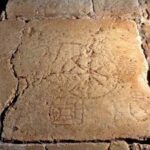
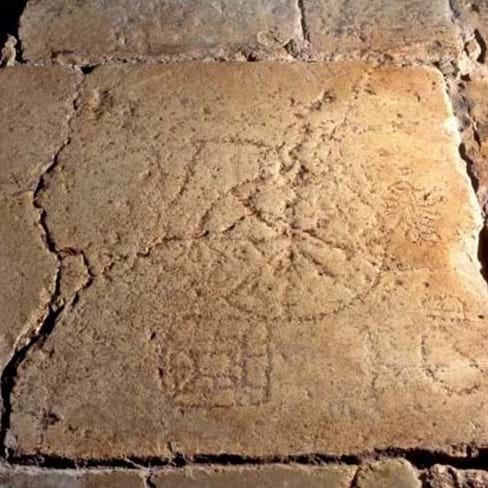
One of the most striking features of the site is a game etched into the stone pavement, believed to be the “King’s Game”—a Roman soldiers’ game in which a prisoner was mocked as a “king” before execution. Soldiers would crown, robe, and strike the victim—usually a condemned prisoner—mirroring the Gospel accounts of Jesus’ mockery before His crucifixion (Mark 15:17–19).

In addition to the pavement, the site includes deep water cisterns, likely used during the Roman and Second Temple periods, offering further insight into the complex infrastructure and layered history of the area.

The Lithostrotos pavement also extends beneath the nearby Monastery of the Flagellation, reinforcing the traditional connection between the two sites. However, archaeological research dates the visible stones to the time of Emperor Hadrian, after the destruction of Jerusalem in the 1st century CE.

The convent includes a quiet chapel and a small museum, offering visitors a space for reflection, faith, and historical discovery.

Opening hours: Monday–Saturday, 9:00 AM–12:00 PM & 2:00 PM–5:00 PM

Admission: Small fee for groups or guided visits

Site 23

Herod’s Palace and the Trial of Jesus:

Excavated beneath the former Ottoman-era Kishle prison—once used by the British and later the Israeli police—just inside Jaffa Gate, the remains of Herod’s Palace are now part of the Tower of David Museum complex. This palace, built by King Herod the Great at the end of the 1st century BCE, was one of the grandest complexes in Jerusalem. Situated along the western edge of the Upper City—today’s Armenian and Christian Quarters—it featured vast courtyards, luxurious reception halls, and massive fortifications, including the impressive Phasael, Hippicus, and Mariamne Towers. These towers, built both for defense and as symbols of Herod’s power, can still be seen today as you enter the Old City through Jaffa Gate, offering a rare glimpse into the architectural splendor of the Herodian era.

After Herod’s death, the palace became the official residence of Roman governors, including Pontius Pilate, making it a significant site for understanding the final days of Jesus. The Jewish historian Josephus, a 1st-century eyewitness to Jerusalem’s destruction, described Herod’s Palace as one of the most magnificent in the Roman world—lavish, with gardens and towers—and noted that Roman governors stayed there during major festivals. This supports the view that Jesus’s trial before Pilate likely took place here, at what was known as the praetorium.

Christian tradition, dating back to the early Byzantine period (4th century CE), has long identified the area near the Monastery of the Flagellation, where large paving stones known as the Lithostrotos (“stone pavement”) lie, as the praetorium’s location. John 19:13 references this site as Gabbatha, the judgment seat.

Yet modern archaeological and historical research increasingly favors Herod’s Palace near Jaffa Gate as the Roman governor’s actual residence and the more probable site of Jesus’s trial.

While we may never know every step Jesus took or the exact locations of each moment in his final hours, engaging with these ancient sites helps bring the biblical stories to life, connecting us tangibly to a profound history of faith and tradition.

Visiting the Site Today

Though much of Herod’s Palace has vanished, its towers and foundations remain preserved within the Tower of David Museum. The Phasael Tower still stands prominently, offering panoramic views of Jerusalem. Multimedia exhibits inside the museum bring the Herodian period to life and trace the city’s rich history—from King David through Roman, Crusader, and Ottoman eras. The recently opened Kishle excavation area adds another layer, revealing both Herod’s palace and remains from later periods of Jerusalem’s turbulent history.

Historical and Spiritual Significance

For history enthusiasts, Herod’s Palace offers a tangible connection to ancient Jerusalem and Roman Judea’s political world. For Christian visitors, it is a powerful reminder of the trial of Jesus—a pivotal moment in faith tradition—grounding this profound event in a real historical and archaeological context.

Site 24

The Armenian Quarter and St. James Cathedral

Armenia is known as the first nation to adopt Christianity as its official religion. This happened early in the fourth century. Gregory the Illuminator, an Armenian nobleman who became a Christian and later survived years of imprisonment, played the central role in this story. Armenian tradition tells that King Tiridates III, who opposed the new faith, suffered a serious crisis. When Gregory, a healer and religious leader, was brought out to pray for him, the king was healed. This moment changed the history of Armenia. Tiridates accepted Christianity, and the people followed.

Armenian pilgrims and monks reached Jerusalem not long after. Over time they formed a strong community inside the Old City. The Armenian Quarter became one of the oldest Christian centers in Jerusalem, and it continues to keep its language, traditions, and culture until today.

The Cathedral of Saint James

The heart of the Armenian Quarter, just a few minutes’ walk from Jaffa Gate, is the Cathedral of Saint James. Armenian tradition connects this church to two early figures. James the Great, one of the Twelve Disciples and brother of John, is honored here. James the Brother of the Lord, a close relative of Jesus who led the first community of believers in Jerusalem, is also remembered.

The church stands on much older foundations, but its main structure was built in the twelfth century. Its quiet halls, hanging lamps, and ancient stones give it a deep sense of history. The cathedral stands next to the Armenian Patriarchate, which continues to guide the community and preserve its heritage. Visitors should note that the church is open only from 15:00 to 15:40 each day during the short afternoon service.

The Armenian Genocide

The Armenian Genocide took place during the First World War. Beginning in 1915, the Ottoman authorities forced Armenians out of their homes across eastern Anatolia. Many were killed, and many others died on long marches through the desert. About one and a half million Armenians lost their lives.

Survivors found new homes across the Middle East and beyond. Jerusalem became one of their safe places. The Armenian Quarter received refugees and helped them rebuild their lives. The memory of the genocide remains central to Armenian identity and is marked every year on April 24.

Armenian Ceramic Art

The Armenians in Jerusalem are also known for their unique ceramic art. This craft began in the early twentieth century when Armenian artisans were invited to restore ancient tiles in the Old City. Their work developed into a distinct Jerusalem style, known for deep blues, clean lines, and floral patterns. Workshops in the Armenian Quarter still produce these handmade tiles and plates, keeping this tradition alive for visitors to see and purchase.

Mount of Olives

The outlook from the Mount of Olives offers one of the most iconic and breathtaking views of Jerusalem. From this elevated point, visitors gain a deeper understanding of the city’s history and its role as a holy center for faith and tradition.

Map Of Israel

Jerusalem

Map Of The Old City 

Galilee

Map of The Sea Of Galilee 

Upper Galilee

 Map Of Upper Galilee

Lower Galilee

Map Of Lower Galilee

Judea & Dead Sea

Map Of Judea & Dead Sea

Interactive map of Jerusalem Old City with religious and historical landmarks

The Western Wall

Western Wall Tunnels

The Dome Of The Rock

The Holy Sepulchre

Gethsemane

King David’s Tomb

The Last Supper Room

The Garden Tomb

The City Of David

Church of St. Peter in Gallicantu

Tower of David Museum

the Armenian Quarter & St. James Cathedral

The Jewish Cemetery

Herod’s Palace

The Walls of the Old City were built by the Ottoman sultan Suleiman the Magnificent in the mid-16th century. The walls are about 4 km long and 12 meters high.

The Tomb of Mary is a Greek Orthodox and Armenian Apostolic church, believed to be the burial place of the Virgin Mary, the mother of Jesus. The church is built underground and features a long stone staircase leading to the ancient crypt.

Mount of Olives

Mount Gilboa

Mount Gilboa rises above the Jezreel Valley as the setting of one of the most dramatic moments in the Bible. According to 1 Samuel 31, it was here that King Saul, wounded in battle and seeing his sons — including Jonathan — lying slain in the valley below, fell on his own sword to avoid capture by the Philistines. Their bodies were later taken and hung on the walls of Bet She’an, visible from the slopes of the mountain.

This event is more than a battlefield tragedy—it marks a pivotal turning point in the biblical story. It reflects the complex relationship between Saul and David, the deep bond between David and Jonathan, and the divine choice to anoint David as the next king of Israel. In the following chapter (2 Samuel 1), David mourns Saul and Jonathan with a heartfelt lament: “How the mighty have fallen…”

This moment also marks the beginning of the rise of the House of David, the royal lineage of Israel’s future kings. Standing at Mount Gilboa, surrounded by the same landscape described in the Bible—the mountain, the valley, and nearby Bet She’an—you can feel the story come alive through the geography and the echoes of the ancient past.

lower galilee_1
upper galilee
map_Kineret 2
Interactive map of Jerusalem Old City with religious and historical landmarks
Skip to content