Walking Tour of Jerusalem
Follow history, faith, and culture in just a few hours
Sample Walking Tour – Old City of Jerusalem
This is a 3–4 hour walking tour in the Old City of Jerusalem. It is designed for visitors exploring the city without a guide who want to see the most important and well-known sites, representing the three major religions. This classic route focuses on three, and in some cases four, of the most significant attractions in the Old City and includes walking through parts of all four quarters.
Along the way, you will pass many additional sites that can be visited if time allows and depending on opening hours. You may also use the Jerusalem map page on this website for ideas for further exploration, as well as the Google Map provided on this page to follow the route and locate each site.
Most independent visitors arrive at the Old City either by private car or by public transportation. Jaffa Gate is the most convenient place to begin and end the tour. You can park at the Mamilla parking lot and reach the gate within a few minutes, or take the light rail and get off at City Hall Station. From there, it is an easy walk of less than ten minutes to Jaffa Gate.
Getting to Jaffa Gate

The walk begins at Jaffa Gate and continues through the Armenian Quarter. On your right, you will pass the Tower of David Museum (the Citadel). Continue south along Armenian Patriarchate Road, turn left onto St. James Street, left again onto Ararat Street, and then immediately right toward the Jewish Quarter.
After a short walk, you will reach the Cardo, where you may wish to stop and explore. Then continue toward the main square of the Jewish Quarter. Pass the Hurva Synagogue , and at the northeast corner of the square, go straight along a street lined with souvenir shops and small restaurants.
At the end of the street, on the right, the path continues down a staircase leading to the Western Wall Plaza. Entry to the plaza is through a security checkpoint.
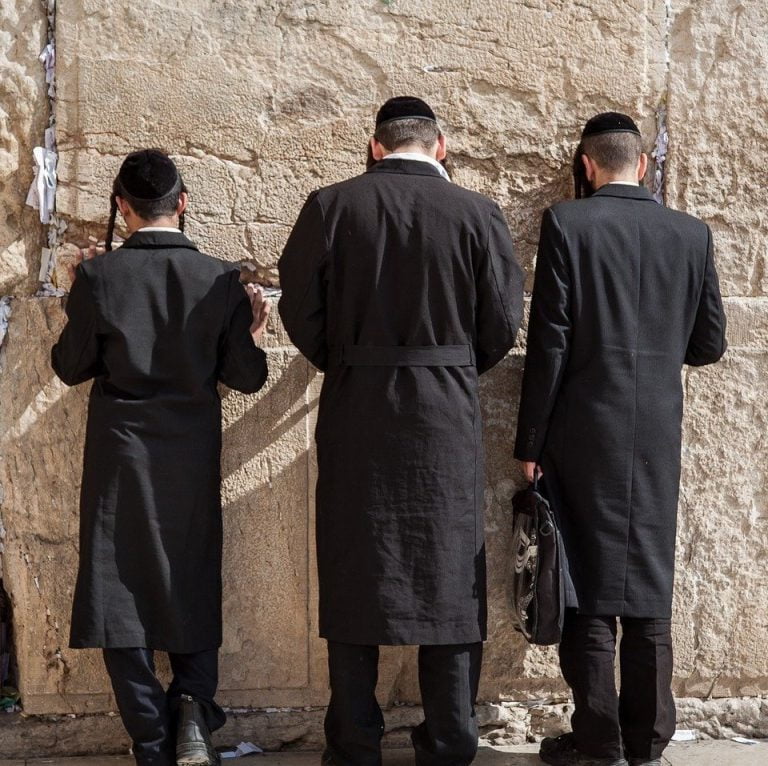
A visit to the Western Wall usually takes about 30 minutes, depending on personal interest. The plaza is divided into two prayer areas, with the women’s section on the right and the men’s section on the left. Men are required to wear a head covering, or a kippah (yarmulke), which is provided free of charge on site.
Jaffa Gate to the Western Wall
After visiting the Western Wall, continue to the Temple Mount. To reach the entrance, go south of the Western Wall Plaza toward Dung Gate. Immediately after the security check, on the left side, there is an additional security screening leading up to the Temple Mount.
The Temple Mount is administered by the Muslim Waqf and is considered a holy site in Islam. According to site regulations, prayer is not permitted for non-Muslims, weapons are prohibited, and religious books such as the Bible or the Old Testament may not be brought onto the site. Visitors should be aware of this in advance, as any such items must be left outside. Modest dress is required.
Visitors may walk freely around the Temple Mount compound, but entry into the mosques is permitted only to Muslims. Visiting hours are limited and vary by day and season. In general, access is only available during morning hours, with entrances closing around 10:00 and a short closure around 12:30. On Fridays and Saturdays, the site is closed to non-Muslim visitors. For this reason, the tour is designed to start early in the morning. During peak tourist seasons, security checks may take a considerable amount of time, and it’s recommended to arrive before 09:00.
From the Western Wall to the Temple Mount

After visiting the Temple Mount, exit through one of the gates on the northeastern side of the compound toward the Via Dolorosa. If time allows, you may start with a visit to the Pools of Bethesda and St. Anne’s Church.
From there, begin walking along the Via Dolorosa route, which starts at the Monastery of the Flagellation, where Station 2 is located. Station 1 is across the street in the building opposite the monastery. A detailed explanation of all the Stations of the Cross can be found on the Via Dolorosa page on this website
Toward the Via Dolorosa

The Via Dolorosa ends at the Church of the Holy Sepulchre. A visit to the church can take some time, especially if you wish to reach the most sacred locations, including Calvary and the Tomb of Christ. During busy tourist seasons, long lines are common. Entry into the Tomb is limited to a small number of visitors at a time, and waiting times can extend to several hours when large tour groups are present.
At the end of the visit, the walk back to Jaffa Gate through the Christian Quarter takes approximately 10–20 minutes.
The Church of the Holy Sepulchre

If you do not arrive in Jerusalem early enough, much of the route can still be completed without entering the Temple Mount. After visiting the Western Wall, continue toward the Via Dolorosa through the northwestern corner of the Western Wall Plaza, using a covered passage with arches. This passage is part of the Western Wall Tunnels complex and leads into the Muslim Quarter along the same street until you reach Station 5 of the Via Dolorosa. From there, turn left and continue the route toward the Church of the Holy Sepulchre.


