Map of Upper Galilee
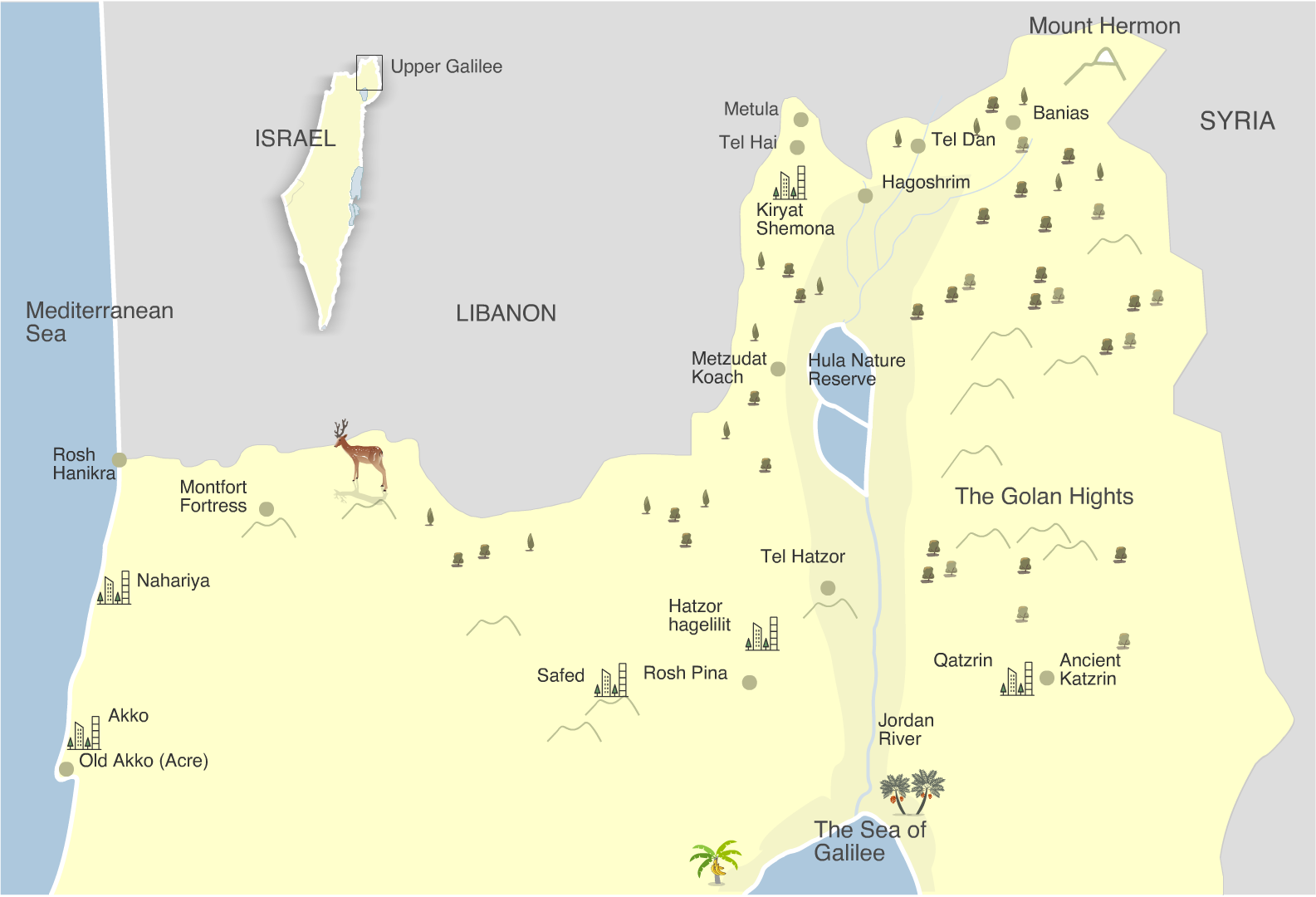
Discover the natural beauty and deep heritage of the Upper Galilee. This interactive map features ancient sites, hiking trails, historical towns, and scenic viewpoints in one of Israel’s most lush and mountainous regions.
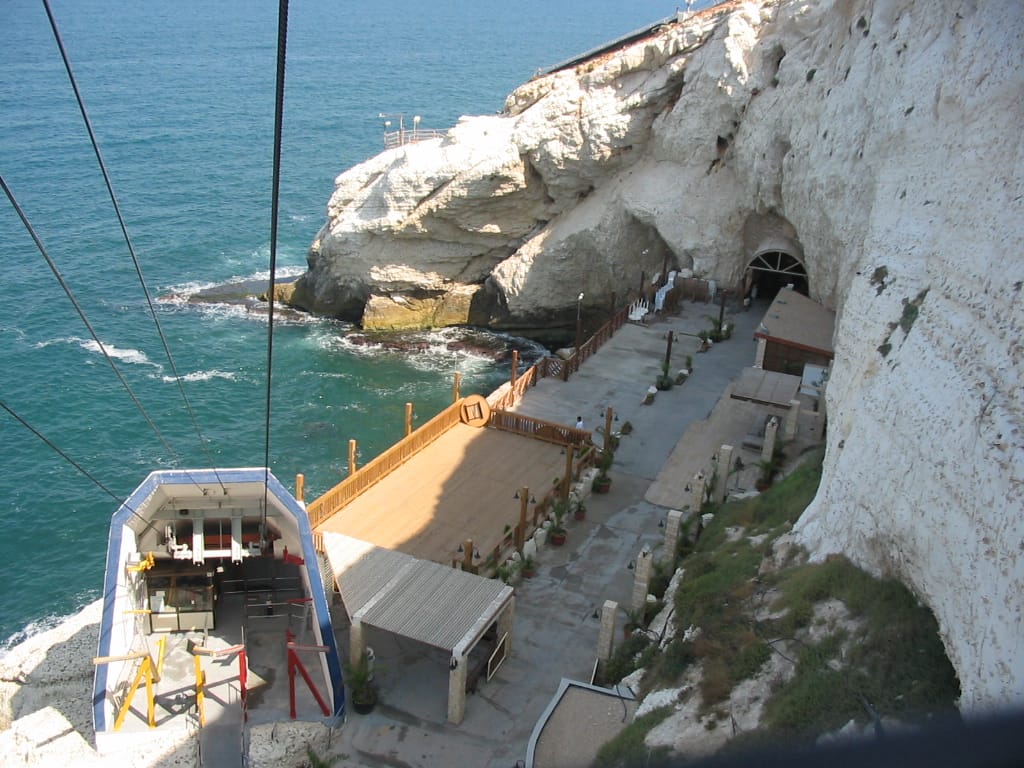
Rosh Hanikra offers a dramatic natural wonder. Visitors descend by cable car to explore stunning sea-carved grottoes—tunnels and caverns shaped by the waves of the Mediterranean over thousands of years.
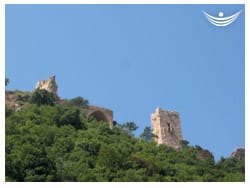
Montfort Fortress is a scenic Crusader castle built in the 13th century by the Teutonic Order.Montfort is a popular spot for hiking and offers beautiful views and a glimpse into medieval history.
Ancient Katzrin is a reconstructed Jewish village from the Talmudic period (4th–6th centuries CE). Visitors can walk through stone houses, a synagogue, and ancient olive and wine presses that show daily life in that era.
Tel Dan
Banias
Tel Hazor
Rosh Pina
Old Akko (Acre)
Safed (Tzfat)
Agmon Hula Park
Tel Hai
Metzudat Koach

Montfort Fortress
Montfort Fortress is a scenic Crusader castle built in the 13th century by the Teutonic Order. It stands on a narrow ridge overlooking the green valley of the Kziv Stream. Though in ruins today, Montfort is a popular spot for hiking and offers beautiful views and a glimpse into medieval history.

Rosh Hanikra
Rosh Hanikra offers a dramatic natural wonder. Visitors descend by cable car to explore stunning sea-carved grottoes—tunnels and caverns shaped by the waves of the Mediterranean over thousands of years.

Mount Hermon
Mount Hermon is Israel’s highest peak, rising over 2,200 meters above sea level. Famous for its snow in winter, it is the country’s only ski site. In warmer months, the mountain offers hiking trails, wide panoramic views, and rare alpine flora, with chances to spot eagles and other mountain wildlife.
Ancient Katzrin
Ancient Katzrin is a reconstructed Jewish village from the Talmudic period (4th–6th centuries CE). Visitors can walk through stone houses, a synagogue, and ancient olive and wine presses that show daily life in that era.
Persian Fallow Deer
Tel Dan
Site 1
Tel Dan Nature Reserve is a unique meeting point of nature, archaeology, and the Bible. At the foot of Mount Hermon, it is home to the Dan Spring, the largest source of the Jordan River, creating a lush landscape of flowing water, shade, and rich vegetation.
In ancient times, this was the city of Dan, originally known as Laish. It was conquered by the tribe of Dan during the period of the Judges, as described in the Bible:
“They named it Dan after their ancestor Dan… though the city used to be called Laish” (Judges 18:29).
The city later became the northernmost center of the Kingdom of Israel. Here, King Jeroboam established a royal sanctuary, placing a golden calf and building a high place for worship—an act described in the Bible as a sin. The remains of this sacred complex can still be seen today.
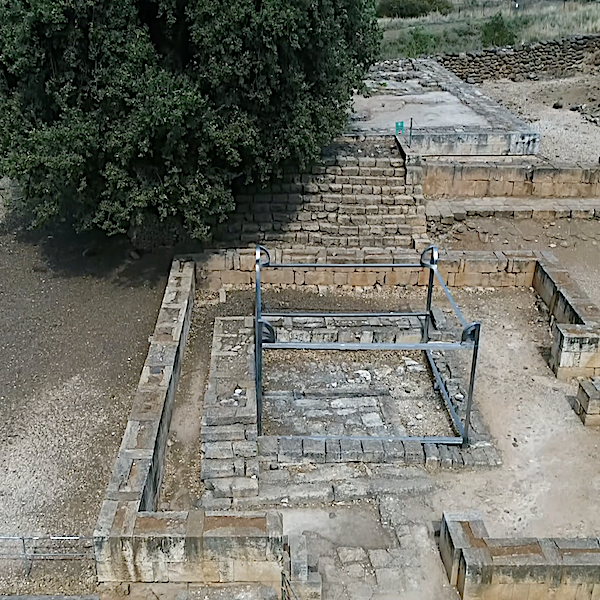
Among the highlights are two impressive city gates: the Canaanite gate, known as “Abraham’s Gate,” one of the earliest arched gateways ever discovered, and the later Israelite city gate, which marked the entrance to the biblical city. Tel Dan also yielded the famous “House of David” inscription, one of the earliest references to King David outside the Bible.
Continue reading
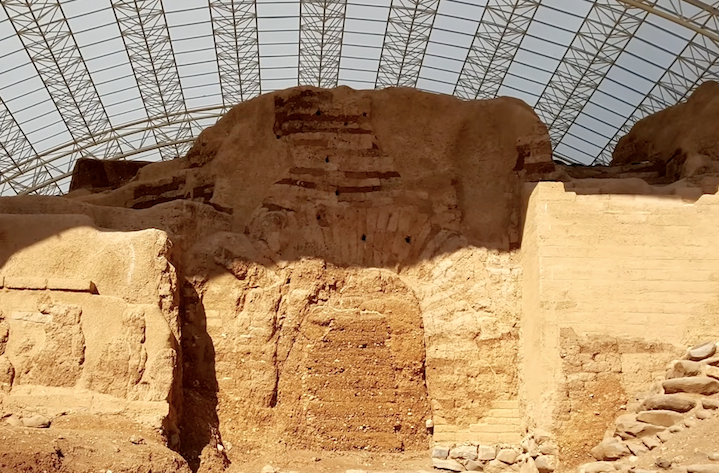
The region of Dan was settled from very early times, with evidence going back to the Canaanite city of Laish around the 2nd millennium BCE. One of its most remarkable remains is the ancient mudbrick gate, built around 1800 BCE. Known today as “Abraham’s Gate,” it is one of the earliest and best-preserved arched structures in the world. Though the name connects it to the biblical story, it reflects the period traditionally associated with the Patriarchs.
The tribe of Dan, originally settled in the coastal plain, struggled against the Philistines and Amorites. Unable to establish themselves there, they migrated north, conquered Laish, and renamed it Dan. From that time, the expression “from Dan to Beersheba” marked the full extent of the land of Israel.
During the time of the divided kingdom, Dan became a major religious center. King Jeroboam of Israel built a high place here, and another in Bethel, to prevent his people from going to Jerusalem to worship at the Temple, fearing their hearts would turn back to the house of David. The Bible presents this act as a sin.
“It is too much for you to go up to Jerusalem… Here are your gods, Israel” (1 Kings 12:28–30).
The archaeological remains reveal a large cultic complex. The altar, reconstructed from findings on site, was massive, large enough for animal sacrifices. It was built of carefully cut stones, unlike the simple altars described in the Torah. A raised platform nearby likely held the golden calf. The layout of the complex, with an altar and an elevated sacred area, parallels the structure of the Temple in Jerusalem.
Excavations also uncovered ritual vessels and surrounding rooms used by priests, who, according to the Bible, were not from the tribe of Levi but appointed by the king.
At the city gate, daily life unfolded alongside leadership and judgment. A large stone-paved plaza with benches and a seat for officials reflects the biblical image of elders gathering at the gate, as described in the Book of Ruth (4:1–2).
One of the most important discoveries at Tel Dan is the “House of David” inscription, found in 1993. This Aramaic victory stele, likely set up by King Hazael of Damascus, mentions the dynasty of David and provides rare archaeological confirmation of the biblical kingdom.
Today, beyond its history, Tel Dan remains a place of natural beauty. The cool waters of the Dan Stream flow year-round, fed by snow and rain from Mount Hermon. The reserve is filled with oak, plane, and laurel trees, and is home to a rich variety of wildlife, making it one of the most refreshing and vibrant landscapes in Israel.

Banias
Site 2
Banias Nature Reserve, at the foot of Mount Hermon, is one of the most beautiful and historically rich sites in northern Israel. Here, the Banias Spring emerges from the rock, forming one of the main sources of the Jordan River and creating a lush landscape of flowing water, dense vegetation, and cool shade. The reserve is also home to the Banias Waterfall, the largest year-round waterfall in Israel.
In ancient times, this place was known as Caesarea Philippi, a city founded by Philip the Tetrarch, son of Herod the Great. Built around a sacred spring and dramatic cliff, it became a center of pagan worship dedicated to the god Pan, alongside temples honoring the Roman emperor.
For Christians, this site holds special meaning. According to the Gospel of Matthew (16:13–18), it was here that Peter declared: “You are the Messiah, the Son of the living God.” In this setting, near a place long called the “Gate of Hades,” Jesus spoke of building his church and a faith that will stand firm, and death (Hades, the grave) will not prevail against it.
Today, visitors can walk through this unique landscape, where flowing water, ancient ruins, and the words of the Gospel come together.
Continue reading
The ancient name of the site, Panias (later Banias), comes from the Greek god Pan, the god of nature, shepherds, and wild places. The towering cliff and its caves formed a sacred complex, where niches were carved into the rock for statues of Pan, nymphs, and other figures of the natural world. Rituals held here celebrated fertility and the forces of nature.
At the base of the cliff flows the Banias Spring, one of the most powerful sources of the Jordan River. In ancient belief, the deep cave from which the water emerged was seen as an entrance to the underworld, known as the “Gate of Hades.” This gave the site a sense of mystery and divine power in the eyes of the Greeks and Romans.
Before the city was formally established, Herod the Great built a grand white marble temple here in honor of Caesar Augustus. Later, his son Philip the Tetrarch founded the city of Caesarea Philippi, turning it into an important administrative and cultural center in the region.
Against this dramatic background, the Gospel describes a pivotal moment. When Jesus came to the region of Caesarea Philippi, he asked his disciples:
“But what about you? Who do you say I am?”
Simon Peter answered, “You are the Messiah, the Son of the living God” (Matthew 16:15–16).
Jesus then said:
“On this rock I will build my church, and the gates of Hades will not prevail against it” (Matthew 16:18).
These words, spoken in the shadow of a place known as the “Gate of Hades,” carry a powerful message. In a setting associated with pagan worship and the realm of death, Jesus speaks of the living God and of a faith that will stand firm, and death (Hades, the grave) will not prevail against it.
Beyond its biblical and historical importance, Banias is also a place of exceptional natural beauty. The reserve offers marked walking trails that pass through shaded woodlands, along the flowing Hermon Stream, and across suspended walkways above the water.
One of the highlights is the Banias Waterfall, reached by a scenic path that allows visitors to experience the sound, mist, and power of the rushing water up close. Along the way, remains from different periods can be seen, including a Roman bridge, Crusader and Mamluk fortifications, and installations such as a flour mill and an early hydroelectric station.
Together, these layers of nature, history, and faith make Banias one of the most unique and meaningful sites in northern Israel.
Tel Hazor
Site 3
Tel Hazor is a significant archaeological site, believed to be the ancient Canaanite city of Hazor. It was once one of the largest and most important cities in the region, mentioned in both the Bible and historical records.
Tel Hazor’s archaeological remains offer valuable clues about the history, culture, and society of the ancient Canaanites and their interactions with other civilizations.
Read More
The Biblical Story of Hazor
Hazor is a city frequently mentioned in the Bible, particularly in the context of the Israelites’ conquest of Canaan. It was one of the most important Canaanite cities, and the Bible records that Joshua captured and burned it during the Israelite conquest (Joshua 11). Later, King Solomon fortified Hazor, along with Megiddo and Gezer, as part of his great building projects (1 Kings 9:15).
Hazor also appears in the Book of Judges as the seat of King Jabin, who oppressed the Israelites for twenty years. His commander, Sisera, was ultimately defeated by the prophetess Deborah and the warrior Barak in a decisive battle near the Kishon River in the Jezreel Valley — the very same valley that in the New Testament is referred to as Armageddon (Revelation 16:16). This dramatic story, ending with Sisera’s death at the hands of Jael, remains one of the most memorable episodes in Israel’s early history.
It is also interesting to mention that the same king who fortified Hazor — Solomon — in his later years built shrines in Jerusalem for foreign gods such as Ashtoreth (associated with Asherah), Chemosh, and Molech (1 Kings 11:5–8). While these shrines were not in Hazor, the prophets — especially Elijah — strongly condemned this idolatry (1 Kings 18).

Rosh Pina
Site 4
Nestled in the picturesque Upper Galilee region of Israel, Rosh Pina is a charming town steeped in history and natural beauty. Founded in the 19th century, it’s one of the oldest Jewish settlements in modern Israel, offering visitors a glimpse into the region’s rich heritage.
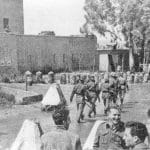
Photo on the right: Rosh Pinna police station during Operation Yiftach, 1948. Operation Yiftach was a major military operation conducted by the Haganah during the 1948 Arab-Israeli War. Rosh Pinna played a strategic role in the defense of the Upper Galilee region.
What to See & Do:
Explore Historic Sites:
- Old Synagogue: This beautifully preserved synagogue, dating back to 1887, stands as a testament to Rosh Pina’s early Jewish community.
- Baron de Rothschild’s Gardens: Inspired by the grandeur of Versailles, these meticulously landscaped gardens offer a tranquil escape.
- Professor Mer House: Learn about the pioneering work of Professor Gideon Mer, a renowned malaria researcher whose efforts significantly impacted public health in the region.
Discover Natural Beauty:
- Hiking Trails: Embark on scenic hikes through the surrounding hills, enjoying breathtaking views of the Galilee.
- Botanical Garden: Explore a diverse collection of plants and flowers in this serene sanctuary.
- Nimrod Lookout: Enjoy panoramic vistas of the Hula Valley, Mount Hermon, and the Golan Heights from this iconic viewpoint.
Experience Local Culture:
- Art Galleries: Discover the works of local artists and artisans showcasing the region’s unique culture.
- Wine Tasting: Sample delicious wines produced in the nearby Galilee vineyards, renowned for their exceptional quality.
- Local Markets: Immerse yourself in the vibrant atmosphere of the local markets, offering fresh produce, handmade crafts, and souvenirs.
Whether you’re a history buff, nature enthusiast, or simply seeking a peaceful getaway, Rosh Pina offers a captivating blend of attractions.

Old Akko
Site 5
Old Akko: A City of Layers and Legends
Old Akko (Acre) is a vibrant walled city on the Mediterranean coast, known for its rich history, atmospheric alleyways, and mix of cultures. Declared a UNESCO World Heritage Site, it offers a unique journey through time, from ancient ports to bustling markets.
The Crusader Legacy
During the 12th and 13th centuries, Akko was one of the most important cities in the Crusader Kingdom of Jerusalem. It served as a major port, military stronghold, and headquarters for the Knights Hospitaller. Beneath the modern city lie remarkably preserved Crusader halls, tunnels, and fortifications, offering a rare glimpse into medieval life in the Holy Land.
St. Francis in Akko
In the early 13th century, St. Francis of Assisi traveled to the Holy Land and is believed to have passed through Akko. His visit helped establish the Franciscan presence in the region, which continues to this day. A historic Franciscan monastery still operates in the city, marking Akko’s role in the Christian spiritual journey.
Napoleon’s Failed Siege
In 1799, Napoleon Bonaparte attempted to conquer Akko during his Middle East campaign. Despite his military success elsewhere, his siege of the city was famously repelled by Ottoman defenders with British naval support. The failure at Akko marked a turning point in his campaign and remains one of the city’s most dramatic historic events.
The British Prison in the Citadel
In the early 20th century, during the British Mandate period, the Ottoman-era Citadel was used as a prison. It held both Jewish underground fighters and Arab nationalists. Today, the former prison is part of the Museum of the Underground Prisoners, where visitors can learn about the resistance movements, daring prison escapes, and personal stories from the time leading up to the establishment of the State of Israel.
What to See & Do:
- Explore the Knights’ Halls
Step into the heart of Crusader Akko at this vast underground complex built by the Knights Hospitaller. These powerful warrior-monks provided care for pilgrims and played a key role in defending the city. Their headquarters included ceremonial halls, dining rooms, storerooms, and an advanced drainage system—all remarkably preserved. Walking through these massive vaulted spaces offers an immersive journey into the medieval world. - Walk the Templars’ Tunnel
Built by the Knights Templar, this underground passage connected their fortress to the port, allowing for secretive movement of troops and supplies. The Templars were known for their military prowess and mysterious reputation, and this dimly lit, stone-lined tunnel gives visitors a vivid sense of their strategic presence in Akko. - Visit Al-Jazzar Mosque
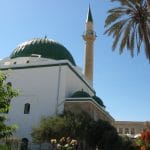
One of the largest mosques in Israel, Al-Jazzar Mosque was built in the 18th century by Ottoman ruler Ahmad Pasha al-Jazzar. It features a peaceful courtyard, a richly decorated prayer hall, and a library of Islamic manuscripts. - Tour the Turkish Bathhouse (Hammam al-Basha)
This beautifully restored Ottoman bathhouse offers an engaging museum experience with audiovisual displays that bring its history—and the stories of those who bathed there—to life. - Tour the Museum of the Underground Prisoners
Located in the former British prison within the Citadel, this moving museum tells the story of Jewish underground fighters imprisoned and executed here during the struggle for independence. - Visit the Khan al-Umdan
The Khan al-Umdan, one of the best-preserved Khans in the city, is a grand Ottoman-era caravanserai. This historic inn once served as a resting place for merchants and travelers along the trade routes. Today, it’s a beautifully restored space featuring galleries and exhibitions, often hosting cultural events and performances. It’s a perfect spot to experience the architectural beauty of Akko’s Ottoman past.
Safed (Tzfat)
Site 6
Safed: The City of Mysticism and Mountains
Perched high in the mountains of the Upper Galilee, Safed (Tzfat) is a city of cobbled alleyways, spiritual resonance, and cool mountain air. It is one of Judaism’s four holy cities, known for its deep roots in Kabbalah (Jewish mysticism) and its unique blend of art, history, and serenity. With stunning views, blue-painted homes, and an atmosphere unlike anywhere else, Safed is a haven for spiritual seekers, artists, and travelers looking to slow down and soak in its peaceful charm.
The Spiritual and Historical Legacy
Safed rose to prominence in the 16th century, when it became a center of Jewish learning and mysticism following the expulsion of Jews from Spain. Great Kabbalistic rabbis, including Rabbi Isaac Luria (the Ari) and Rabbi Yosef Karo, made the city their home, turning it into the heart of spiritual revival. Their teachings still echo through the narrow streets, ancient synagogues, and study halls.
Over the centuries, Safed also played a role in the defense and formation of modern Israel. During the 1948 War of Independence, the city was the site of intense battles that led to its integration into the new state.
What to See & Do:
There are many things to see and experience in this unique mountain city—rich in spirituality, art, and history. Here are some of the highlights:
- Visit the Ancient Synagogues
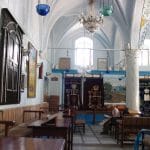
Explore beautifully preserved 16th-century synagogues that reflect Safed’s rich Kabbalistic past. The Ari Ashkenazi Synagogue is known for its ornate wooden ark and deep spiritual ambiance. The Abuhav Synagogue features a painted dome and ancient Torah scrolls said to date back to Spain. Also visit the Rabbi Yosef Karo Synagogue, a modest yet revered site named after the renowned scholar and author of the Shulchan Aruch (Code of Jewish Law). Its quiet interior offers a meaningful glimpse into the city’s role as a center of Jewish learning. - Wander the Artists’ Quarter
Once home to many of Israel’s most prominent painters and sculptors, this historic area is filled with galleries, studios, and boutiques. You can meet local artists, browse colorful works inspired by Jewish tradition, and even take part in workshops. - Explore the Alleyways
Safed’s winding stone alleys, lined with blue doors and flowerpots, create a peaceful, almost dreamlike atmosphere. Take a slow walk, enjoy the mountain air, and discover hidden courtyards, old synagogues, and scenic viewpoints. - Learn at the Kabbalah Visitors’ Center
For those curious about Jewish mysticism, the Kabbalah Center offers an engaging introduction to Safed’s spiritual heritage, including interactive exhibits, historical context, and guided tours. - Visit the Citadel and Lookout Point
At the city’s highest point lies the Safed Citadel, a ruined Crusader fortress with panoramic views of the Galilee and Mount Meron. The nearby park is perfect for a quiet rest or picnic while taking in the scenery.
Agmon Hula Park
Site 7
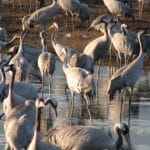
Agmon Hula Park is a premier eco-tourism destination in Israel’s Upper Galilee, renowned for its rich biodiversity and as a critical stopover for migratory birds along the Afro-Syrian Rift. Twice annually, over 500 million birds from more than 400 species, including cranes, pelicans, storks, and egrets, traverse this region, making it a haven for birdwatchers and nature enthusiasts alike.
What to See & Do:
1. Birdwatching and Wildlife Observation
Agmon Hula offers unparalleled opportunities to observe a vast array of bird species in their natural habitat. The park’s strategic location makes it a prime spot for witnessing the awe-inspiring spectacle of bird migrations during the fall and spring seasons.
2. Cycling and Walking Trails
Explore the park’s 8.5 km flat trail, suitable for all ages and fitness levels. Bicycles, including tandem and family bikes, are available for rent, allowing visitors to immerse themselves in the serene landscapes at their own pace.
3. Electric Golf Cart Tours
For a leisurely experience, rent an electric golf cart to navigate the park’s trails. This option is ideal for families with young children, elderly visitors, or those seeking a relaxed tour.
4. Safari Wagon Guided Tours
Join guided safari wagon tours that provide close-up views of the park’s wildlife without disturbing their natural behaviors. Tours are available at sunrise, during the day, and at sunset, each offering unique perspectives and experiences.
5. Visitor Center Experiences
Enhance your visit at the Agmon Hula Visitor Center, which features:
- Mini-Agamon: An innovative audiovisual display detailing the park’s history.
- Auditorium Films: Screenings of “The Four Seasons” and “In Constant Motion,” showcasing the park’s beauty throughout the year.
- Interactive Bird Wall: An engaging quiz to learn about the diverse bird species in the area.
- “Fly With The Cranes” VR Experience: A virtual reality adventure simulating a flight with cranes over the valley.
Agmon Hula Park offers a unique blend of natural beauty, wildlife observation, and educational experiences.
Tel Hai
Site 8
Set in the rugged hills of the Upper Galilee, Tel Hai is more than just a quiet spot on the map—it’s a place deeply woven into the early story of modern Israel. In the early 20th century, a group of determined young Zionist pioneers, many of them recent immigrants from Eastern Europe, came here to settle the land. They arrived with dreams of farming, building, and reviving Jewish life in the ancient homeland.
Read More:
But life in Tel Hai was anything but easy. The settlers faced harsh physical conditions—isolation, limited resources, and the constant threat of disease. At the same time, they were navigating a tense political landscape. The Ottoman Empire had recently collapsed, and the region was caught in a power vacuum as the British and French carved up former Ottoman territories. Nearby, Arab populations were also responding to the uncertainty and foreign presence, sometimes with suspicion and hostility.
In 1920, these tensions erupted in violence. Arab fighters approached Tel Hai as part of broader unrest in the region. A skirmish broke out, and during the battle, eight Jewish defenders were killed, including Joseph Trumpeldor, a decorated veteran of the Russian army and a towering figure in early Zionist history. His famous last words—“It is good to die for our country”—turned Tel Hai into a symbol of Jewish heroism and sacrifice.
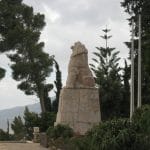
Today, visitors to Tel Hai can walk through the restored courtyard, view the museum and exhibits, and stand before the Trumpeldor Monument, a striking statue of a roaring lion that captures the spirit of courage and endurance. Overlooking the peaceful Hula Valley, Tel Hai is both a place of remembrance and a tribute to those who laid the foundations for a future Jewish state—against all odds.

Metzudat Koach
Site 9
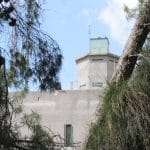
Metzudat Koach, also known as Nabi Yusha Fort, is a former British Tegart fortress in the Upper Galilee, built in the 1930s as part of a network of strongholds to help control unrest during the British Mandate. These fortified police stations were designed to be nearly impenetrable, with thick walls, high towers, and strategic locations.
In May 1948, during Israel’s War of Independence, Palmach fighters fought to capture the fortress from Arab forces in order to open the road to the besieged town of Safed. The operation succeeded, but 28 soldiers, including commander Meir Amshalem, lost their lives.
The name “Koach” (כ״ח) commemorates the 28 soldiers who fell in the battle, as the Hebrew letters כ״ח represent the number 28.
Read More
The Tegart Fortress: Explore the preserved British-built fort, an example of the durable and strategically designed police stations from the Mandate era. Its architecture and location reflect its former military importance.
Memorial Monument: Visit the striking stone monument dedicated to the 28 fallen Palmach fighters. Their names are engraved in stone, and the site is often used for memorial ceremonies.

Wild Life
The Upper Galilee, a region of lush forests, flowing streams, and rugged hills, is a haven for nature lovers and wildlife enthusiasts. Known for its serene landscapes and cool mountain air, it’s also home to a rich variety of wild animals. Here’s a glimpse of some you might encounter